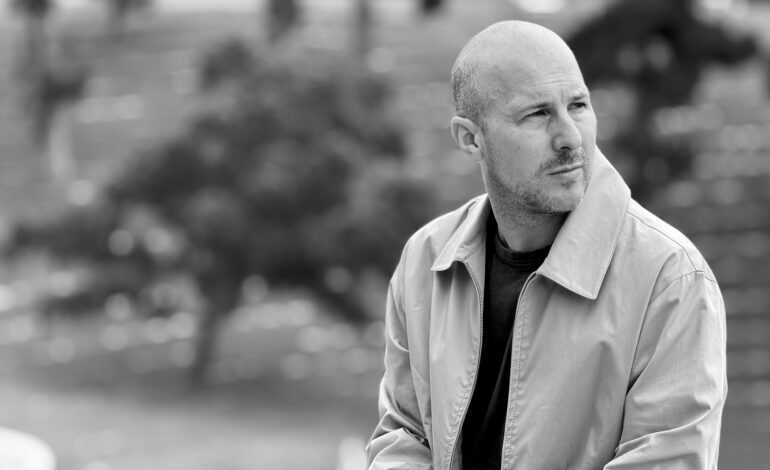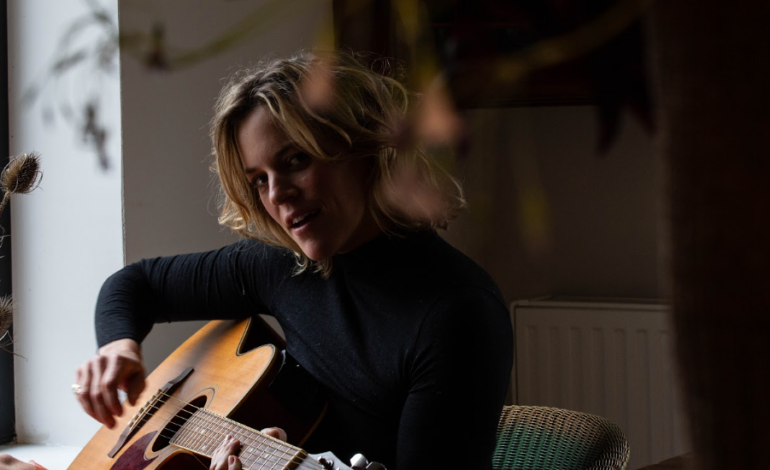

Independent artist Neona Ray returns with “Those Two Blue Eyes,” a powerful new single that marks the beginning of a defining new chapter in her musical journey. Produced by George Harris, the release introduces a more focused alternative pop sound built around rhythmic guitars, hip hop inspired drums, and subtle nods to 1980s influences, while retaining the emotional honesty that has become Neona’s trademark.
- “Those Two Blue Eyes” explores the moment when a lifelong people pleaser begins to recognise unhealthy patterns. What was the personal realisation that sparked the song, and how did you know that this particular experience needed to become music rather than simply remain something private?
An odd interaction and developing pattern with a then-close friend pushed me over the edge. I realized how much time I spent wondering whether other people’s behavior was normal, what I had done wrong, and asking if I was overreacting. She would only reach out after I did, reassure me how much she missed me and wanted to meet, then disappear again for weeks. I aired my grievances, but the pattern continued, and I eventually stopped pouring my energy into it.
From previous songs, I’d learned that music is how I work through both my people-pleasing patterns and the sadness that comes with those realizations. Once a song is released into the world, it feels like checking the box on those emotions and sending them off for good. With each song, I’m clawing my way back toward inner peace.
- You describe the song as a moment when a people pleaser discovers that sensitivity deserves protection. How has your understanding of sensitivity changed over the years, and do you think there is still pressure, particularly in creative spaces, to become tougher or less emotionally open in order to be taken seriously?
In the past, I simply equated sensitivity with being weak and easily overwhelmed. Now I equate it to being very attuned to other people’s emotions, actions and intentions. That can be a strength and help me maneuver social situations, but it also means I need to protect myself from absorbing everything at once, and give myself space to decide what actually deserves a response or my energy.
Emotionally, I find the creative world to be a paradox: you need to be open and vulnerable enough to create real, raw art that connects with people, yet to handle the business side of the music industry, you need thick skin and the ability to take very little personally. It’s a really difficult balance to achieve, especially when your true self is the softer part of you.
- The production combines rhythmic guitars, hip hop inspired drums and subtle 1980s influences, while the lyrics remain deeply personal. What did you and George Harris want the production to communicate emotionally, and how did you find the balance between making the track sonically infectious and preserving the vulnerability of the story?
George really calls the shots on the production side, though I always steer us towards tracks with a strong, heavy beat because it mirrors the weight and intensity of the emotions I’m writing about. At the same time, I’m very conscious of keeping my vocals natural and close—never overly processed, too airy or buried in too much reverb—so you can still hear the emotion and almost feel like I’m in the room with you.
George has been producing my music for over two years now, and I think he has really perfected that balance between energetic, infectious production and my somewhat gentler voice. That contrast allows the track to feel powerful without losing the vulnerability underneath it.
- You have mentioned that many of your lyrics arrive while you are driving. What is it about that particular environment that seems to unlock your creativity? Do you approach songwriting differently when an idea arrives spontaneously compared with when you deliberately sit down intending to write a song?
Driving keeps my main attention focused on the road while leaving my subconscious free to roam. I once watched a documentary about research suggesting that our creative minds can do some of their best work while we’re occupied with a relatively undemanding task; they allow the creative mind to wander, and I’ve definitely found that to be true for me.
The car is like my own little creative bubble. I can’t hear the rest of the world, and they can’t hear me, yet I’m observing the world at the same time. Ideas, melodies and lyrics seem to find their way into my bubble.
I almost never sit down intending to write a song. The ideas and inspiration really have to come to me, rather than me searching for them. When something arrives spontaneously, I follow it and see where it wants to go.
- Your journey into music came after studying Mathematics and Applied and Computational Mathematics, rather than through a traditional musical path. Do you see any connection between the analytical side of your education and the way you now approach songwriting, production, structure or the business of being an independent artist?
When it comes to songwriting itself, I go very much with the flow. But everything surrounding the art has to be extremely structured before I can feel truly creative. I use a workflow app called ClickUp that lets me organize different streams of tasks while still seeing the big picture, and I definitely need my structured ducks in a row before I can let loose creatively.
Production, distribution, marketing and finances are all carefully organized — finances being a part I actually really enjoy — and I owe a lot to my mathematics background for making structure and an A-to-Z mindset come naturally to me. My brain simply works best that way: once the logical side of my career feels sorted, I feel free to be spontaneous with the art.
- Hurricane Harvey was a major turning point in your life and ultimately led you towards poetry and songwriting. Looking back now, how do you think that experience changed the way you understand creativity, healing and the relationship between personal hardship and artistic expression?
Looking back, Hurricane Harvey taught me that hardship and healing can coexist. I learned that healing can sometimes begin with a very rough patch before you work your way toward the sunnier parts of life. All the songs I have written as a result of that catastrophe have ultimately helped heal so many parts of me. I didn’t know it then, but in a strange way, that flood was exactly what I needed to steer my life in a more healing direction.
Having grown up with a lot of childhood trauma, I hadn’t actually realized how much I had stored internally until I began writing songs. Music gave me a way to understand those experiences, work through them and eventually let some of them go.
Creativity, to me, is like Lego made from blocks of raw emotion — you take all these emotions that connect us as humans and put them together to build something beautiful. Harvey somehow opened a volcano of creativity in me that I didn’t even know existed.
- You have taken on an unusually broad role in your career, from recording vocals and creating vocal arrangements to managing distribution, royalties, artwork and marketing. What have you learned about yourself by having control over so many parts of the creative process, and is there anything you would rather hand over to someone else as your career grows?
It has taught me that it truly is never too late to master something new. When I first started, I knew very little about the industry and would never have imagined managing so many different parts of my career. I’ve learned an enormous amount along the way, with the help of mentors, teachers and friends.
As an independent artist, understanding all these areas has become almost essential. I enjoy having that overview and control, but marketing is probably the part I would most gladly hand over completely. I’m quite camera shy, and while I still want to direct the overall strategy, I’d love more help bringing the visual side of my songs to life — preferably without out-of-character TikTok dances.
- Your phrase “tiny person, huge emotions” feels like more than a tagline. It seems to capture an entire artistic philosophy. What does that phrase mean to you today, and how does it influence the way you approach your music, visual identity, performances and relationship with your audience?
Sometimes I feel like one giant fuzz ball of emotions, absorbing everything and everyone around me. At 5’3″, my small frame can almost disappear in that sea of emotions, to the point where it becomes difficult to tell where I end and the rest of the world begins. So “tiny person, huge emotions” is really quite literal — it describes how I move through the world.
That contrast shapes my music too. I want production that feels big and powerful, with beats and vibrations you can physically feel, set against my softer, gentler vocals. Visually, I echo that same contradiction through bold contrasting colors, oversized earrings and stacked bracelets: a tiny person with a bold, colorful presence. Ultimately, I want my audience to know that it’s okay to feel deeply, to contain contradictions, and still belong. You’re not alone in feeling that much, and you don’t necessarily have to drown in it.
- Your audience is already becoming increasingly international, with listeners in places such as Brazil and growing ambitions around markets including Tokyo. What do you think allows an intensely personal song to travel across cultures, and what have you learned from hearing how listeners in different parts of the world connect with your music?
I’m convinced that listeners can feel the emotion and intention of a song even if they don’t understand every lyric line. Sometimes the rhythm, production and energy alone can put you in a certain state of mind and communicate the mood I’m trying to create.
We may come from very different cultures, but the underlying emotions, struggles and experiences are often surprisingly similar, and I think that is what allows a personal song to travel. Lyrics are incredibly important to me, and I craft every line with care, but I’ve learned that they are not always the only doorway into a song. Sometimes people connect with the feeling first.
- You have described “Those Two Blue Eyes” as the beginning of something much bigger. If we imagine meeting Neona Ray several years from now, what would you love that future version of yourself to have accomplished creatively? Beyond streams and numbers, what would make you feel that you had built the artistic life you originally hoped for?
More than anything, I would love to meet the people who have connected with my music at my own live shows — even if they are small — and hear their stories. To be in the same room with people who have carried some of the same things I have, maybe even cry together, and realize that we are all still standing tall despite everything we’ve been through, would make me feel like I had fulfilled my purpose.
Being an introvert, in a way, making music is my way of finding like-minded friends. It’s about helping others feel less alone, but also about discovering that I’m not alone either — that I wasn’t crazy for feeling the way I did all those years. That kind of real connection is what I crave most, beyond screens and social media.
Creatively, there is something about a live orchestra that reaches the deepest emotional corners of me. To one day re-create one of my songs with a full orchestra and perform it together would be the pinnacle of my musical career.
Instagram, Facebook, Generic, Spotify, Apple Music, Soundcloud, Amazon Music, YouTube, YouTube Music