
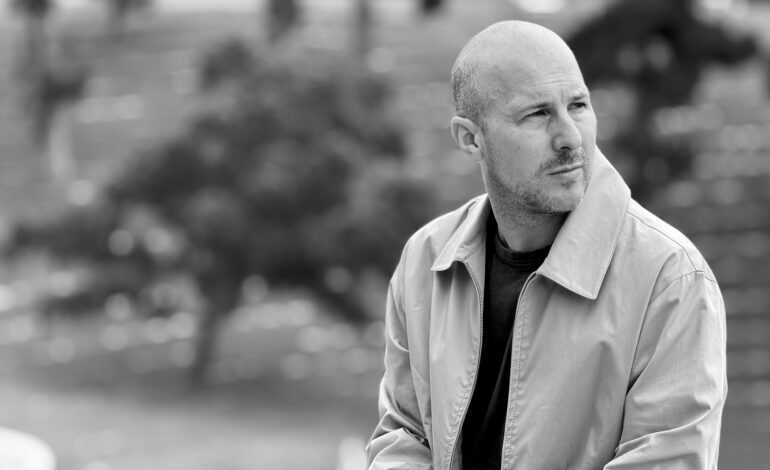
Twenty years after stepping away from music to afford health insurance following a chronic illness diagnosis, songwriter Stephen Canfield returns with the debut album from Healthcare, a deeply personal collection of songs that turns loss into purpose.
Your journey back to songwriting after twenty years away is extraordinary. Was there a specific moment when you realized it was finally time to make Healthcare, or was it a gradual process?
I finally picked up a guitar again during a tough time in the early 2020s. It had been 15 years since playing an instrument, and maybe for the first time since I was ten years old,I started writing just for me. Art for art’s sake vs. art for an audience. Most of these songs were conceived in the year that followed, free of any expectations that they’d ever be recorded.
Oddly enough, the turning point came during a horror movie marathon in our house one October. Watching something truly unhinged, I realized that I was more afraid of starting over again in music than I was of what was on the screen. I wrote “Middle Age” the next morning as a reflection on that, and I’ve returned to it as a call to overcome those demons ever since. I’m grateful for it.
The album explores themes of chronic illness, resilience, and transformation without ever feeling weighed down by them. How did you find the balance between deeply personal storytelling and creating songs that feel universal?
That’s very generous, thank you. Over the years I’ve found that the more specific something is, the more universal it feels. I’m not sure where songs come from, but I’m a big believer in letting them lead you vs the other way around. All we can do is get out of the way and learn how to be okay with that vulnerability. We all experience grief and loss, whether that’s in love, with faith, with family, or as our bodies start to fail us. Art is a shared language that helps us feel a little less alone in it, and ideally, it can play a part in transformation and renewal. What a gift.
You describe the record as being inspired by the Celtic idea of “thin places.” How did that concept shape both the songwriting and the sonic landscape of the album?
I was talking to a friend a few years ago who told me that life with a chronic illness was a sort of thin place of its own. You’re a little closer to death in your day-to-day. It’s a heavy thought, but it’s also kind of liberating, like you’re gifted a little more perspective on how delicate things are.
My favorite music, books, and art have always been about in-betweens. They’re unmoored and messy, but we grow when we’re moving from one thing to another rather than when we’re standing in place. For this album, I wanted to embrace that in as many ways as possible, from where the songs live to the instrumentation surrounding them. I was desperately searching for some beauty in that fragility.
The instrumentation blends Americana, indie folk, ambient music, and electronic textures in a very organic way. How did you and your collaborators approach building such an expansive yet intimate sound?
I was lucky to work with an incredible group of players on this album, starting with live, full band sessions in Nashville. Adam Ollendorff, a friend from college and virtuosic multi-instrumentalist who co-produced 5 songs on the record, brought the group together. When we were looking over charts and listening to work tapes, we talked a lot about how everyone should be unafraid to do the unexpected. Giving folks the freedom to try things or break things vs playing the way you might on another session. The sonic landscape came together pretty quickly from there.
I give a lot of credit to Adam and Dylan Alldredge, a brilliant engineer and lover of sonic oddities, who really embraced that way of working. Kevin Dailey, who plays all over this record, was a big contributor as well.
Having spent years working behind the scenes with artists like Björk, Kamasi Washington, and FKA twigs, did those experiences influence the way you approached your own music, even indirectly?
I think looking closely at what any great artist is doing helps you understand the bar—for taste, for curation, risk, attention to detail (not to mention the virtuosity of the writing and performing). I’ve been lucky to be a small part of projects for some truly brilliant people, and getting even a little glimpse of the way they work has been invaluable.
Tracks like “Middle Age,” “Clean,” and “Oh Lord” carry a quiet emotional weight. Were there any songs on the album that proved especially difficult—or unexpectedly easy—to write?
I write constantly, so there are hundreds of songs in my notes app that will never see the light of day. I’ve found that the ones that stick are the ones that come easiest, so I just try to show up to be there when they do.
I wrote “Clean” and “Unknown” on the same morning, and both came fully formed after a reflective, sleepless night. “Middle Age” was similar.
The big counterpoint on the album is “Dollars on Dimes.” I sat down to write it after receiving a pretty devastating medical bill, and maybe it was just too raw. It took months to get it to a place that felt ready to record, and when I tried, I had my worst health day in years in the session—so much so that I barely remember tracking it.
The same thing happened again a few weeks later when I tried to re-cut vocals, and we ultimately decided to keep it raw because maybe it was supposed to be. The instrumentals and vocals in the outro are meant to show that maybe there’s some release in that acceptance—of the quivers in your voice, a disease in your body, and even a fucked up healthcare system you’re left to navigate
You reunited with several longtime friends from your Berklee days to make this record. What was it like collaborating with people who knew you before your two-decade hiatus from songwriting?
Adam Ollendorff, who I mentioned above, was a close collaborator and the first person I shared these songs with outside of my partner. We hadn’t spoken in years, but he was a champion from the start, and we picked up right where we left off. Similarly, I reconnected with drummer Cam Brousseau (Unknown and Heartbreak Song) and Larissa Maestro (background vocals on Dollars on Dimes and cello on Middle Age). They’re such incredible players and people. It was amazing how quickly things felt natural.
The album is deeply personal, but it’s also connected to a broader mission through your support of MusiCares. How important was it that Healthcare become more than simply a record, but also a way of giving back to the music community?
Before we even started recording, it felt important to have a charity component to the project—especially given the pseudonym. I’m far from the only person who’s had to navigate the music industry with an illness; I’m just one of the lucky ones who found some time and resources to put something out despite the hurdles. If there’s any money to be made in music anymore, it would be irresponsible not to give some back to others dealing with similar things that I have.
The visual identity, created by Grammy-winning designer Lawrence Azerrad, complements the album’s themes beautifully. How closely did you work together in developing the artwork, and how important was the visual presentation in completing the project?
Lawrence has been a close personal friend for over a decade, and we’ve done a number of projects together. I think the world of his work, and I was incredibly touched when he offered to do the art for the LP.
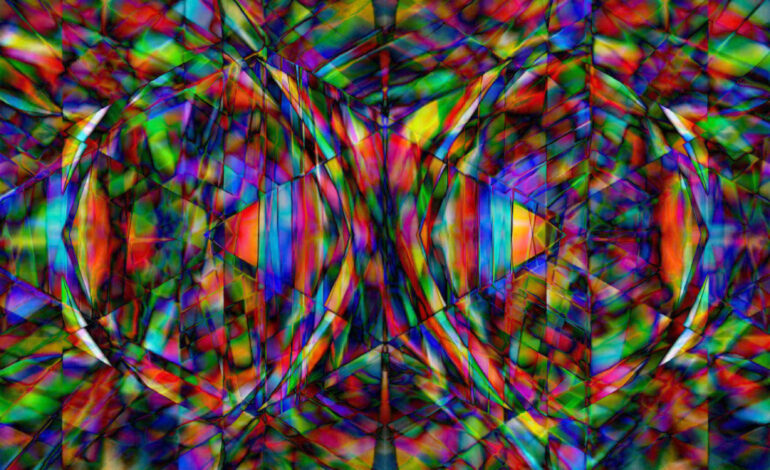
The underlying concept was all his—a collage of old anatomical diagrams that attempted to turn cold and sterile things into something beautiful—and that felt right immediately. I was taken by it right away.
From there, we collaborated in person and back and forth to tweak and test the edges, before eventually choosing the medical cross as a focal point. We’ve developed a shorthand over the years which made the back and forth really easy.
After such a long journey back to making music, does Healthcare feel like the closing of one chapter, the beginning of another, or perhaps both? And has making this album changed the way you think about your future as a songwriter?
I feel the most myself when I’m writing and playing music, and that part of me was dormant for so long. Releasing this album feels like a weight lifted in many ways. When I got sick, I had to harden myself to make it through those early years, and I hope this is the beginning of a period where I’m more comfortable being my whole self, even if that means being vulnerable.
That said, the unfortunate reality is that it’s still nearly impossible to afford good healthcare in America without a significant income, which is increasingly hard to come by in the arts. Until that changes, I, alongside many others, will be here in one of those liminal spaces—and I’ll be trying to integrate my music with what needs to be done to afford the things that keep me alive.
It’s a new chapter, and one I’m really excited about. Hopeful even. But for now, it’s still the same book.
Purchase the LP: http://healthcaremusic.co/store
Find Healthcare: Instagram, Spotify, Bandcamp, Apple Music, Website