
Words: Prince Far Out Photographs: John Johnson.
I had been looking forward to this The Congos gig for quite some time. They were playing at (the always wonderful) Future Yard in Birkenhead, and given that when pushed, I always cite The Heart of the Congos as my favourite reggae album, I needed to be there.
You are probably confused right now – “Hold on, I thought this was The Coral 388 review!”.
Bear with me and all will be explained.
The first thing to say is that 388 arrived in the social media sphere with no fanfare, no announcement, and originally on vinyl only. It took a little research to discover that this was indeed a brand new full player from The Coral, and that it harked back to their early influences including my own beloved reggae.
Having bagged the vinyl via ace record store (and lovely people) Skeleton Records in Birkenhead, I then got hold of music files that I could listen to in the car, and thought that, given the aforementioned reggae roots, it might be worth listening to 388 en-route to The Congos gig, with a view to reviewing it for Urbanista.
I cannot deny, I am averse to white reggae/dub/ska (aside of course from the totemic The Specials), and I utterly despise UB40. Collie Budz pulls it off, but I am not a fan. That said, I did love Martin Carr‘s excursions, notably on Giant Steps‘ Upon 9th and Fairchild and Lazarus, but that aside I think it either smacks of cultural appropriation or sounds too ‘try hard’… or is just plain awful. (Another notable exception is Serge Gainsbourg‘s Aux Armes Etcetera album, but that benefitted from the presence of Sly and Robbie and the I-Threes).
I had no doubts as to the authenticity as far as The Coral were concerned though.
Having been blown away by 388 in the car – the album has Jamaican dust sprinkled all over it, even when it’s not reggae – I parked up by the sex shop opposite Future Yard, and, trying my hardest not to look like a sex pest in the market for a dildo or a pair of nipple clamps, I headed into the venue. Having got a much needed drink on this scorcher of a day, and having dealt with the disappointment of the beer garden being shut (I was hoping this would be an outdoor gig – nowhere does it better than Future Yard), I ventured outside for a smoke. On returning, I spotted someone who looked remarkably like Ian Skelly, but I wasn’t sure. The last time I had come face to face with The Coral was backstage at a V Festival, thanks to Iain Templeton, God rest his soul. Liam Gallagher and Mick Head were deep in conversation on one table, whilst a bunch of impossibly young looking lads were set back in their own little sphere, jamming and lost in the music to such an extent that they were oblivious to the momentous musical meeting of Manchester and Liverpool. That was at least twenty years ago, so I wasn’t entirely sure it was Ian. Then I saw a Nick Power lookalike, and then a James Skelly lookalike, and considered this unlikely to be a tribute act. “These boys have fine taste” I thought!
I entered the The Congos gig with some trepidation, since they are no spring chickens, and feared they might desecrate my beloved reggae touchstone but I needn’t have worried because they were magnificent, with all the vocals still on point…and those songs!
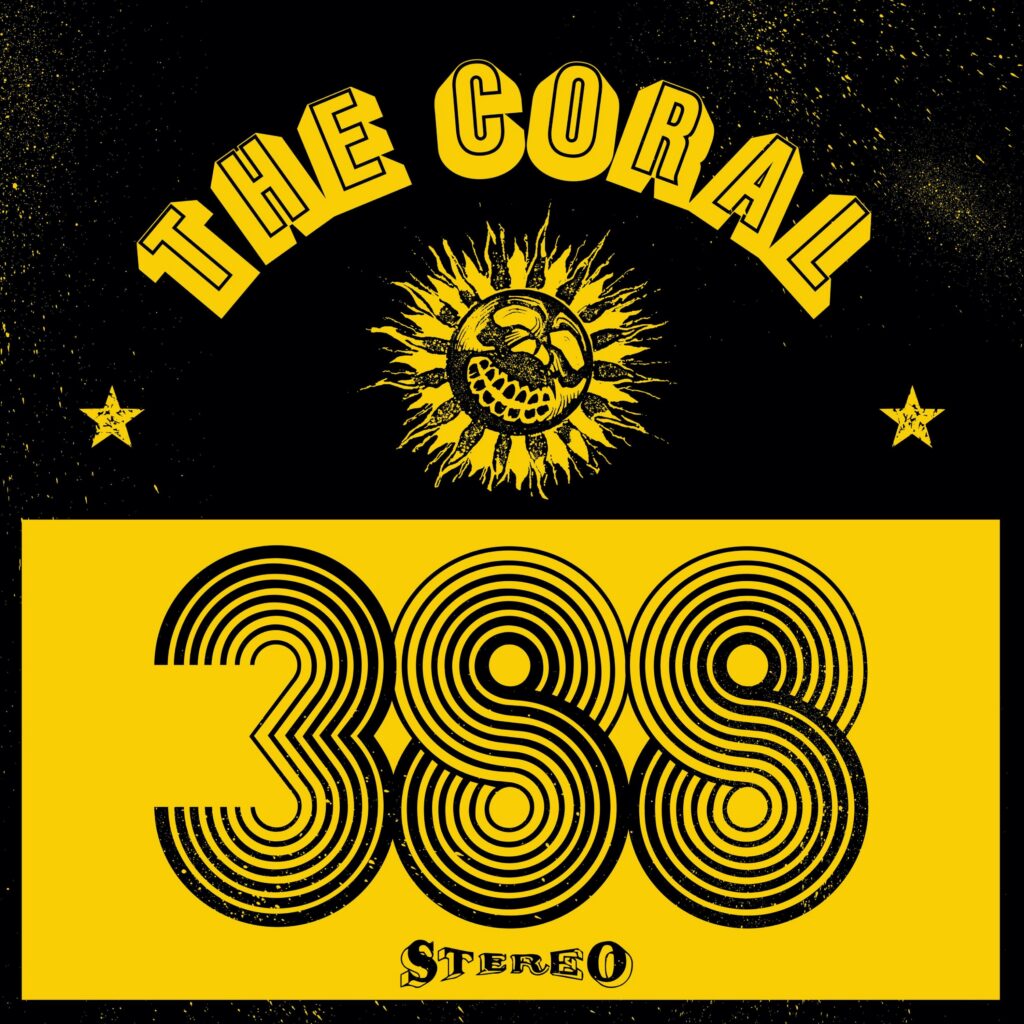
But I digress, and so to The Coral album.
As mission statements go, Let The Music Play, is it. With horns sounding like they were sourced straight out of the Alpha Boys School JA, the lyrics set The Coral‘s stall out from the start, that this is going to be an album unashamedly trumpeting their influences;
“Play that song again. You know the one. The one we used to smoke to. When we were young“.
It is a striking sound because it is so redolent of the time that is being evocated. There are no cod-reggae vocals, it is simply a pure and authentic paean to the 1970’s reggae that they listened to in their youth, with wistful lyrics augmenting the sound.
I know fuck all about music technicalities, but I do know a little about recording techniques in 1970s Jamaica, and apparently this album was run through a TASCAM mixing desk, as was a lot of dub reggae back in the day, so that no doubt lends to the fantastic sound emerging from the speakers.
The rollocking Ride That Train still has echoes of Jamaica wafting down from the Blue Mountains whilst retaining that unique The Coral sound. Indeed, The Coral have always been a band that uses backing vocals as an instrument (I remember a friend of mine asking which of the multi-layered vocals on She’s Got Spies by the Super Furry Animals I followed , and The Coral are the same) and on 388 they are reminiscent of that burgeoning reggae sound that added a splash of vibrant colour to music in the 1970s.
As if to accentuate the point, the lovely and bouncing ska of Leave It In The Past is next, and it could easily have been recorded at any point during the past five decades, but it sounds so rooted in the late sixties and specifically in the output of the Wailers. The backing vocals in particular are a nod to the sweet sounds that Peter Tosh added to the Wailers, as best epitomised on the Wailers high tide mark, their performance in 1973 on the Old Grey Whistle Test, and in particular on the version of Concrete Jungle (www.youtube.com/watch?v=HwY7eY5I-9I) They looked and sounded at their most magnificent, and they never truly captured that greatness again. The fact that The Coral conjure up that reverie, says all you need to know about the quality of Leave It In The Past. The drum rolls are pure JA as is the overall vibe.
The Coral know their shit.
You and Me (and the Beautiful Sea) exchanges the lively opening for the imagined sound of waves lapping against the shore, and as such conjures up the sound of the Wailers High Tide, Low Tide, and the scene from Rockers where Winston Rodney reasons with the world with just a spliff and the Caribbean Sea for company, singing Jah Nuh Dead. Calm and contemplative, You and Me (and the Beautiful Sea) it is in contrast to the urgent Shame that follows, with a chorus that remains lodged in your brain. The echo on the chanted backing vocals of Shame, shame, shame is fantastic. So packed is 388 with melodies that you will find yourself humming a number of tunes from it as you go about your daily lives, and that is always the sign of top quality song-writing.
Here Come the Tears is a beautiful soulful lament set to an easy going laid back vibe, and again, it contains a chorus that is difficult to remove from between your ears, not that you’d want it dislodged.
Mid The Congos gig I had to get out for some fresh air and for a smoke, a dichotomy I know, but it was steaming in there. Ian Skelly‘s doppelganger obviously had the same idea and stood next to me so I ventured over, and opening with “Is it Ian?”, began telling him that I loved the album having listened to it on the way down. We chatted about the way it had been released, recorded, musical influences and how great The Congos were, and then I told him how I thought Leave It In The Past reminded me of late 60s Wailers. He told me that was his favourite. I said mine was Yellow Moon, to which he, seemingly surprised, replied “I wrote that”.
Yellow Moon is a stately and superbly evocative tune, with those backing vocals again contributing wondrously to the overall mood, especially with the killer line “Love is cruel, in it’s own secret way“. Just when you are marvelling at the song, some simple but intriguing piano flourishes take it into another stratosphere, making it a quite beautiful listen.
Sad Girl is like something Dennis Wilson might attach his name to, such is it’s simple serenity, whilst High Tide is an easy summer groove and sounds like an update of Sly‘s Hot Fun In The Summertime, had Sly lived on the Wirral in 2026.
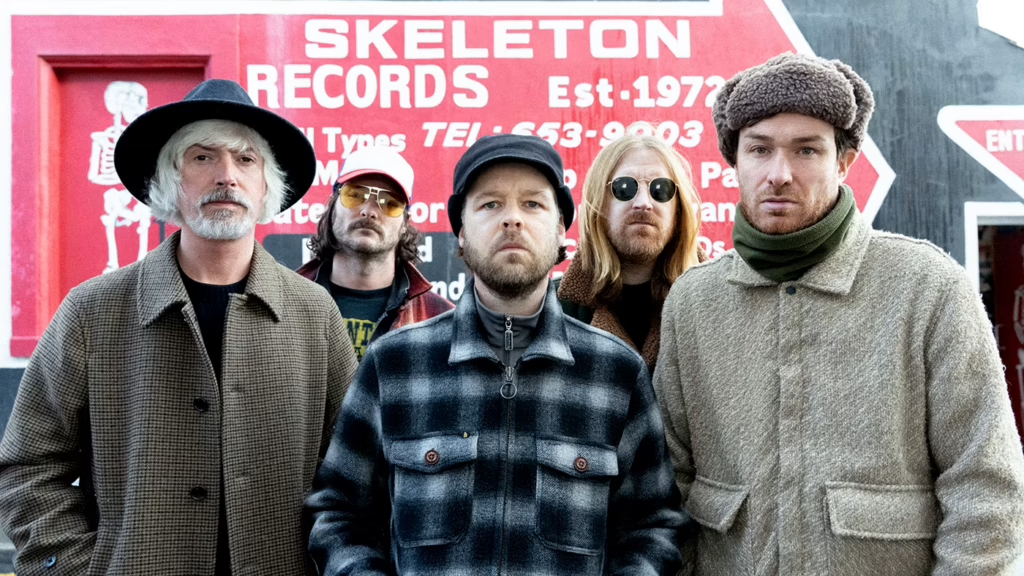
So far so good, but the album’s centrepiece has to be Spirit Catcher which grooves along to otherworldly backing vocals and lyrics, that whilst not being anything to do with Jamaica sonically, still conjures up the presence of the obeah that floats over the island with lyrics such as;
The spirits, they move through the trees/I hear their secrets hanging on the breeze
and;
I’ve tried to talk with the dead/there’s no answers and I’m not one to beg
The song also brings Billie Holliday‘s Strange Fruit to mind. Musically it sounds like the kind of track Bobby Womack would write in his prime. It motors and it is ace, reaching a crescendo that offers strange sonic interludes that discombobulate the listener.
The final track of the album is Crossing the Sands which features a Spaghetti Western twang, that despite not being reggae, suggests the genre of film so beloved by Jamaicans, and in particular the cinema scene in The Harder They Come. It sounds like the sort of thing that Screaming Jay Hawkins might deliver, but with James Skelly‘s wonderful vocals instead of the hysterics of Hawkins.
It is a suitable end to the album because it sounds like The Coral despite it’s forays into the musical past, flung from the mysteries of other lands. My go to song when the sun is out, is The Coral‘s Being Somebody Else, a piece of perfect song-writing, but now thankfully, I have a full album to accompany the occasional visit of the sun to these isles.
Twenty years ago I saw The Coral honing their craft and locked into their own musical universe. With 388 they have given us the key. Indeed, tonight, seeing Nick Power punching the air to Ark of the Covenant by The Congos, illustrated that the band’s passion for music remains undimmed, and in 388 they have decided to share it with the world in a quite magnificent manner.