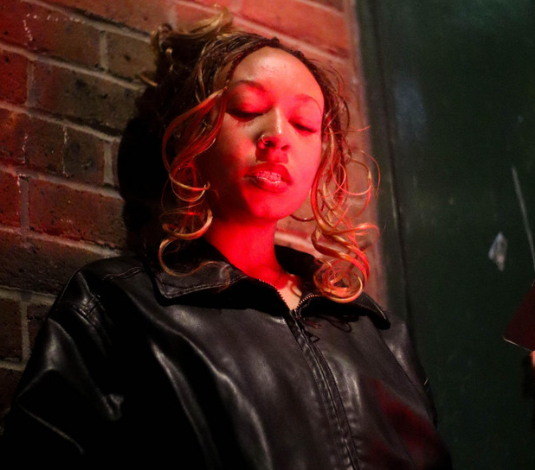

Fringe Frontier is the songwriting partnership of John Lloyd and Jerry Thomas. Their music is powered by driving rhythms, hook-filled guitars and evocative Americana storytelling, blending elements of garage rock, shoegaze, punk and rock ‘n’ roll into a distinctive sound. With more than 40,000 Spotify streams and praise from respected music publications including The Big Takeover, York Calling and Savoy Truffle Tunes, Fringe Frontier continue to establish themselves as one of independent rock’s most compelling emerging acts.
Criminal Hour feels like your most complete artistic statement so far. What was the driving vision behind the album?
Thanks for the kind words! With each album, I think bands want to keep moving in new directions. We had the thought of keeping the core “voice” we laid down on “Wirehouse” but expand sonically with some different tones and tempos, few different styles. From a lyrical perspective, I wanted to cover more subjects, incorporate a wider vision of experience. It’s heartening to hear that came across in the final product.
Your music blends garage rock, Americana, shoegaze and punk into a distinctive sound. How has that musical identity evolved since you first started writing together?
Jerry and I both dig all genres of music—from the old standards to The Strokes and beyond—so it’s natural for us to bring the bits of styles we’re drawn to into our songs. Lyrically, I grew up in the South where storytelling is a real part of the culture. That’s the Americana side, and both Jerry and I love folks like John Prine and John Hiatt, Lucinda Williams and Bonnie Raitt. All great lyricists and songwriters. Our songs are really a nod to all the artists we admire, and we keep trying to bring more and more styles into the tunes, while still keeping the sound cohesive and our own. Being somewhat eclectic keeps it fun for us.
Many of the songs explore themes of loneliness, memory, hope and redemption. Were these themes intentional from the outset, or did they emerge naturally during the writing process?
Not necessarily intentional, but I think a mood sets in when writing, and many of the lyrics came before the music on this album. And of course, if you get a little down, you wanna give the listener some brightness—or at least a little humor about the state of things. Hopefully, there’s enough of that.
“The Lights of Edisto” is one of the album’s most powerful moments. Can you tell us about the inspiration behind the song and what you hope listeners take from it?
Appreciate the kind words about that song. It’s loosely about someone close to me who’s suffered from, and thankfully continues to overcome, addiction. It’s an ongoing struggle, of course. So I wanted to paint an ‘honest’ picture of the challenge but importantly show a hopeful glimpse of the recovery, even if that itself takes daily effort.
Songs such as “Little Five Points” and “City of Dreams” create vivid portraits of place. How important are locations and landscapes in shaping your songwriting?
Geography is very impactful for me—maybe too much so!—from a lyrical perspective. It grounds me and forms a kind of road map for telling stories. My hope is the specificity of place draws people into the experience. From a musical perspective, we try to evoke the energy of the landscape—or at least the mood within the landscape.
You worked with McKenzie Smith on mixing and Kim Rosen on mastering. What did their contributions bring to Criminal Hour, and how did they help realise your vision for the record?
McKenzie was incredibly kind to work with us. He’s obviously a tremendous musician and talented engineer. For him to bring his ear and experience was not just great for the songs but for our belief in them. And Kim was fantastic, too. She’s worked with so many of the artists we admire that we knew she’d bring magic. Together, they gave us a real shot of confidence and brought the songs to life in a way we hadn’t imagined.
“Follow Me” reflects on the realities of promoting music in the digital age. How do you balance the demands of social media with simply making the music you want to make?
That’s a tough one. A musician can’t really just be a musician anymore. It’s a difficult balance for us. We still lean much more to the music. But we’re working to level things out a bit. We really admire those that can succeed at both. It’s a full-time job.
Your songs are often compared to artists like Bruce Springsteen, The Strokes, The Smiths and Wilco. Which musicians have had the greatest influence on your songwriting, and are there any unexpected inspirations?
Those are lofty comparisons for sure. I think being in “the style of” those artists is more accurate. They’re all in a distant and wonderful orbit from us. I named a few earlier, but I’d also throw out Lou Reed and Billy Bragg, the Buzzcocks and The Jam. Maybe less obvious would be Guy Clark and Billie Holiday from a lyrical standpoint. I’m not in the same league as those folks. I’m just lurking in their shadows.
Looking back over the recording sessions, was there a particular song that surprised you by evolving in a completely different direction from where it began?
The harder more uptempo ending of “The Lights of Edisto” was off script. We recorded that over two sessions and Jerry had the idea to move the song a little more after the second break. Which was great for the energy. He really keeps things lively. He can play any style. Lucky for me!
As Fringe Frontier continues to grow, what ambitions do you have for the future, and where do you see the band’s journey heading after Criminal Hour?
We have two more albums already mastered. Both will be released one single at a time. So we’re excited about that. And we’ve just started rehearsals with a bassist and another guitarist. So hoping to get a little tour booked in the spring, which will be awesome!!