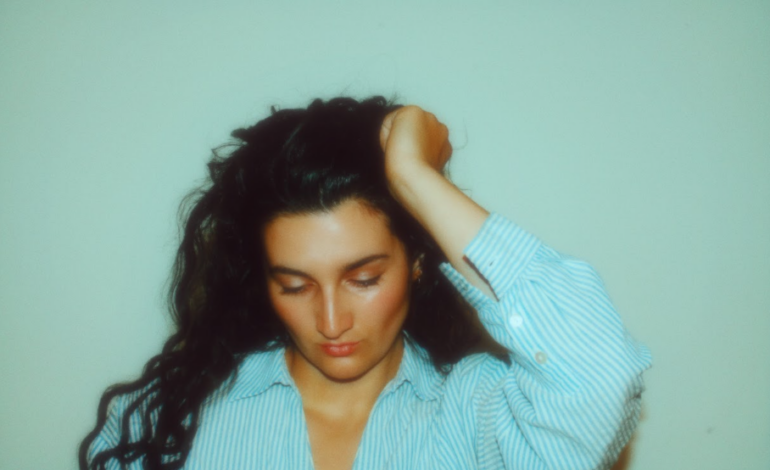

With her latest single, Good Lover, ZK Jade transforms a familiar modern dating dilemma into a sharp, emotionally resonant pop statement. Blending dark pop, Pop-R&B, and alternative influences, the track explores the frustration of investing in someone who can offer intimacy but not genuine commitment—a dynamic that has become increasingly common in today’s dating culture.
At its core, Good Lover is about self-worth, emotional boundaries, and the courage to walk away from situations that fail to meet your needs. Drawing from both personal experience and the stories of friends navigating similar challenges, ZK Jade captures the tension between what the heart wants and what the mind knows is best. The result is a song that feels both deeply personal and universally relatable, wrapped in a sleek, atmospheric production crafted alongside longtime collaborator HILLOC.
In this conversation, ZK Jade discusses the inspiration behind the single, the realities of modern relationships, the creative process behind its striking lyrics and production, and why choosing yourself should never be mistaken for settling for less.
- What was the initial spark or experience that inspired Good Lover?
It’s actually a funny story. I have a lot of friends navigating relationships, and unfortunately I keep hearing very similar experiences—people investing in someone who simply isn’t able or willing to commit. It feels like such a common issue these days. Our generation seems to be struggling with slowing down, focusing, and putting in the effort to build a genuine connection with one person.
That’s really where the concept for Good Lover came from. I genuinely hope this changes, but I do think social media and dating apps have contributed to the problem. We’re constantly presented with endless options, and our attention spans have become so short that many people struggle to fully invest in one thing—or one person. I think that’s quite sad, and I wanted to explore that reality in the song.
- The song explores intimacy without emotional availability. Why was this theme important for you to examine?
I love love. I’m such a lover girl, and I’ve been single for more than four years now. During that time, it’s been surprisingly difficult to meet someone who aligns with my values and the things that are important to me.
For a long time, I wondered if I was the problem. When you’re single for a while, it’s easy to start questioning yourself. But I’ve come to realise that being on your own isn’t a red flag. Sometimes it simply means you have enough self-respect to wait for the right person rather than settle for the wrong one.
I wrote this song for anyone who has ever felt that way—for people who want something real and refuse to lower their standards just because everyone else seems comfortable with less.
- Was there a particular lyric or moment in the song that unlocked the rest of the writing process?
Definitely the opening lines of the first verse:
“If I listened to my head I wouldn’t be here, sitting on your bed slipping my red underwear back on thinking damn, now I’m all alone.”
Those lyrics unlocked the entire story for me. They capture that moment when you know what the right decision is, but your emotions are pulling you in a different direction.
Sometimes doing what’s best for yourself requires a lot of strength, and your heart can get in the way of that. I’ve struggled with that in the past, and writing those lyrics helped me explore that conflict between what you feel and what you know.
- How did you and HILLOC approach the production to match the emotional tension within the lyrics?
I always love working with HILLOC because he’s incredibly good at taking my ideas and elevating them. Sometimes I struggle to fully articulate what’s in my head, but he somehow understands exactly what I’m trying to achieve and brings it to life in a way that’s even better than I imagined.
He also knows me really well as an artist, so he was able to create a production that didn’t just match the emotional energy of the song—it matched me. It has that edgy, sexy, mysterious quality that feels very authentic to who I am as an artist.
- The track blends dark pop, Pop-R&B, and alternative-pop influences. How did you decide on the sonic direction for this release?
Honestly, I don’t think there was a moment where I consciously decided on the sonic direction. It happened very naturally during the writing process.
Thankfully, I’m at a stage in my career where I’m starting to understand my artistic identity much more clearly. The music that comes out of me now feels a lot more instinctive and authentic. Dark pop, Pop-R&B, and alternative pop are definitely the spaces where I feel most at home, so the song naturally evolved in that direction.
- What do you think Good Lover says about modern dating culture and relationships today?
I think it says that modern dating can be absolutely draining—and often quite superficial. I say that with a laugh because it’s become so common that sometimes all you can do is laugh about it.
It feels like we’ve reached a point where situationships, mixed signals, and emotional unavailability have become normalised, especially in places like LA. What worries me is that people are starting to accept these dynamics instead of questioning them.
The irony is that if you choose not to participate in that culture, you’re often treated like the odd one out. Even the word “situationship” still baffles me. What does it actually mean? Why are we creating new terms to avoid calling things what they are?
- Did writing this song change your perspective on vulnerability or emotional boundaries in any way?
Absolutely. When I was writing this song, I was experiencing something very similar in my own life. It made me realise that I don’t have to accept a situation simply because it’s become common or socially accepted.
If maintaining healthy boundaries means being the “odd one out,” then I’m completely okay with that. I’d rather stay true to myself than compromise my happiness or self-worth.
- What was the most challenging aspect of creating Good Lover creatively or emotionally?
Emotionally, I think the hardest part was knowing that people would realise I had been in a situation like this myself.
At the time, I felt embarrassed that I had accepted behaviour that didn’t align with what I deserved. I worried that people might see me differently because of it. But the truth is that everyone makes mistakes, and every mistake teaches you something valuable.
Looking back, it was an important lesson in self-worth, and I’m grateful for what it taught me.
- How does this single fit into your broader artistic journey and the themes you’ve been exploring recently?
At the end of the day, I make music because I love expressing my feelings and experiences. My biggest hope is that people hear my songs and find something they can relate to within them.
A lot of my music explores emotions, relationships, self-discovery, and personal growth. If a song can make someone feel understood, comforted, or a little less alone, then I’ve achieved what I set out to do.
That’s really the purpose of my artistic journey, and if Good Lover can have that kind of impact on even a few people, I’ll be incredibly happy.
- What do you hope listeners feel or reflect on after hearing Good Lover for the first time?
I hope listeners walk away knowing that they don’t have to conform to what’s currently considered “normal” in dating culture.
Being treated like an option is not something anyone has to accept. And if choosing self-respect means being single for a little longer, that’s completely okay. Being alone is not a red flag.
More than anything, I hope the song reminds people to value themselves enough to wait for the kind of love they truly deserve—and to feel proud of that decision.