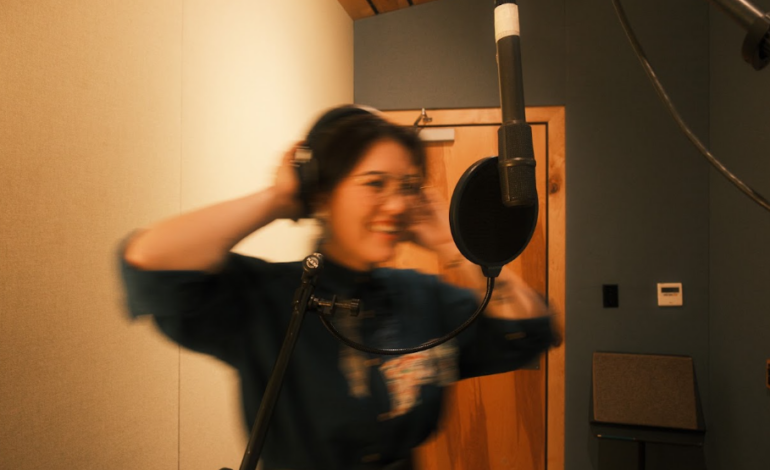

Revived Echoes turns the complicated territory of love, longing and emotional uncertainty into something both intimate and expansive. On You Never Felt the Same, personal experience becomes a story about unreciprocated love, imagined futures and the difficulty of separating what happened from what we wished had happened. Atmospheric electronic production and danceable rhythms give the track a sense of movement, while its reflective lyrics explore vulnerability with a maturity that avoids bitterness or self-pity. We caught up with Revived Echoes to discuss the personal story behind the single, the role of songwriting as a way of processing emotion, London’s influence, and the musical journey ahead.
1. “You Never Felt the Same” deals with the painful experience of unreciprocated love and the fantasy we build around someone who doesn’t feel the same way. Was this drawn from a personal experience, and if so, how did you navigate the process of turning something so intimate into a piece of art that feels universal?
A: All my songs are drawn from personal experience, although I must admit this one is probably near the top in that regard.
That said, I don’t think the emotions behind it are unique to me. I believe that most people have experienced that strange space where the reality of a situation and the fantasy built around it become difficult to separate. For me, the key is to focus on the emotional truth rather than making the song only about my own story. That leaves enough space for listeners to attach it to their own experiences and find something that they can relate to and bond with.
2. The production on this single is incredibly atmospheric, blending danceable rhythms with moments of real introspection. Can you walk us through your creative process when crafting the sonic landscape for this track, and how you decided which textures and sounds would best serve the emotional narrative?
A: Because it is a very reflective track, I wanted the melody to carry the feeling that this person leaves behind. There is a recurring emotional thread running through the different sections of the song, almost as if their presence keeps returning even when the story has already moved on.
I also wanted the production to show more than just the painful side of the theme. Even if the experience was difficult, there was still something beautiful and intense about the emotions it created, even if only briefly. So the sound needed to hold both sides: the melancholy of what was not reciprocated, but also the brightness of what it felt like at the beginning.
3. Your music often explores the more difficult emotions, the ones that people sometimes struggle to articulate. Do you find songwriting to be a form of therapy or catharsis for you, and how do you protect your emotional wellbeing while diving into such vulnerable territory?
A: Songwriting helps me make sense of things. It allows me to take something that feels heavy or unclear inside my head and put it into a more defined form. There is something helpful about ordering those thoughts, giving them language, and turning them into something external rather than letting them remain as an internal weight.
In terms of emotional wellbeing, I don’t think too much about protecting myself from the process, because the more safeguards I put up, the less honest I can be. So far, writing about these subjects has been helpful rather than harmful.
4. London has such a rich and diverse music scene. How has your environment shaped your sound and your approach to songwriting, and are there any particular venues, communities, or artists in the city that have influenced your creative journey?
A: London has given me the opportunity to be around creative circles where these kinds of themes are explored, and I have learnt a lot from that. In a city like London, everything is constantly moving and changing, which can be very inspiring in itself.
I would not say there is one specific venue or community that I return to all the time. I tend to move between different spaces rather than belong to one fixed scene. But that variety has definitely shaped my approach. Being surrounded by so many different people, stories and emotional worlds naturally feeds into the way I write.
5. The lyrical content of this single is remarkably nuanced, avoiding the easy traps of bitterness or self pity. How do you strike that balance between honest emotional expression and the more complex, reflective perspective that defines your songwriting?
A: I think part of it comes with age and perspective. I’m in my 30s now, so I’ve had time to live through different experiences and reflect on them more clearly. The feelings are vivid, especially when intentionally explored, but I can look at them with more distance and understand them more rationally.
That does not mean removing the emotion. The emotion is still the centre of the song. But I don’t let it cloud the whole perspective. When I was much younger, the songs I wrote were very different. They were more fully absorbed by the feeling itself, without much balance. Now I feel I am able to write the kind of music I actually want to make, with enough maturity to hold both vulnerability and perspective at the same time.
6. You draw inspiration from multiple genres and melodic influences, which gives your music a distinctive identity. Who are some of your biggest musical influences, and how do you incorporate those inspirations without losing your own unique voice in the process?
A: In terms of dance and electronic music, I draw inspiration from artists like Meduza, Topic, Pascal Junior and Lost Frequencies. But my musical journey has been quite broad. I used to listen to a lot of hip hop, so Eminem has to be mentioned, I also admire artists like Ed Sheeran, particularly for the strength of his songwriting and the way he can move between different musical styles while still keeping a clear identity.
At the same time, I don’t usually follow artists in a very fixed way. I am more drawn to specific songs that resonate with me. Some artists achieve that more often, of course, but I am usually searching for songs, melodies and emotional ideas that fit what I am trying to express rather than trying to follow one particular artist’s path.
Maybe that lack of attachment to one specific influence helps me keep my own identity. I also think the combination of emotionally detailed lyrics with dance and electronic production is a big part of what makes Revived Echoes distinctive.
7. The track explores the idea of the imagined future, the life we construct with someone who ultimately doesn’t share our feelings. How important is the storytelling aspect of your music to you, and what do you hope listeners take away from the narratives you create?
A: Storytelling is essential to me, because in the end that is often what we are left with: the stories we build around the things we have experienced. With “You Never Felt the Same”, the story is not about rejection in a broad sense, but about one particular rejection and the way it continues to shape you over time. It is about how one person, one moment, or one emotional imbalance can stay with you for years and become part of the way you understand yourself.
What I hope listeners take away from my music is a sense of validation. I want them to feel that their emotions are not something to be ashamed of, especially when the subject is difficult to talk about from a vulnerable place. At the same time, I always try to include a sense of factual positivity. We may go through painful experiences, but we survive them, we carry on, and we keep growing.
8. Your work is clearly focused on connecting with listeners on a deeply personal level. Have you received any particularly memorable feedback from fans about how your music has resonated with their own experiences of love, loss, or longing?
A: Not yet in that very personal or confidential way. I have received praise for the lyrics, the themes and the music, which means a lot, but I have not yet had listeners share deeply personal stories with me about their own experiences.
I would never want to force that kind of connection, but if someone feels that one of my songs helped them understand something they were carrying, that would be incredibly meaningful.
9. Looking beyond this single, what can fans expect from Revived Echoes in the near future? Are there plans for an EP or an album, and do you see yourself continuing to explore similar themes or branching out into new emotional and sonic territories?
A: My plan is to continue releasing singles regularly. There are still themes I want to explore, and the next song touches on a different topic from the ones I have released so far.
I will continue exploring certain emotional areas for as long as I feel there are new angles and perspectives to bring to them. Once I feel I have exhausted one area, I will naturally move towards something else. For me, it is important that each song adds something new, even if it belongs to the same broader emotional world.
10. If you could sit down with a listener who is going through the kind of emotional turmoil depicted in “You Never Felt the Same,” what message or piece of advice would you want to share with them through your music?
A: I would tell them to give the pain some space, and to take some time to process what happened. But I would also say not to wait until they feel completely healed before continuing to live, grow and explore new parts of life.