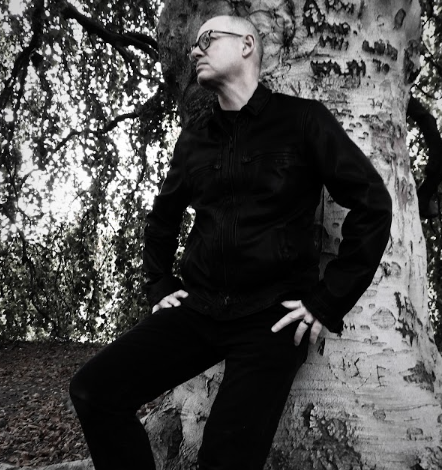

There’s something elusive about Sky Fish Fly—like trying to hold onto a dream just as it starts to dissolve. The latest release from kazaizen drifts between psychedelic textures, soul-inflected grooves, and warped pop fragments, all stitched together by a deep sense of feeling rather than form. It’s an album that doesn’t announce itself with a rigid concept, but instead slowly reveals its shape over time. We caught up with kazaizen to talk about intuition, fragments, rhythm, and building entire sonic environments from moments that almost slipped away.
Critics have described your work as “genre-defying”—is that something you embrace, or does it feel limiting in its own way?
I like that. Variety is the spice.
Many reviews highlight the album’s balance between abstraction and accessibility—was that a conscious tension you were working with?
That may the way it turned out to be. I don’t think it was a conscious decision.
Some listeners interpret Sky Fish Fly as more about mood than structure—how do you respond to that reading?
I would have to agree. The structure or flow of the album just felt right. The songs themselves are experiences or difference moods you could say.
There’s been praise for the album’s lo-fi yet rich production—what role does imperfection play in your sound?
The low fidelity is not intentional. It may be a product of how I like things to sound from the source all the way to mixing with effects and layering. I loathe pristine studio perfect clean recordings for some reason. I prefer sounds that are gritty, spacey sounding, or have an out of the ordinary character.
Reviewers often point out the nostalgic elements in your music—do you see your work as looking backward, or transforming the past into something new?
I don’t make an attempt to create vintage sounding music. That being said, influences from the past certainly come into play. I hope it sounds like the here and now when it is created, but not trying to imitate music from back in time.
A few critics suggest certain tracks feel more like “sketches” than fully resolved songs—do you agree with that idea, or is that openness intentional?
I suppose that the songs just turn out to be the way they are. I won’t put in effort to make up additional parts just to make a track longer. If it feels right, I let it stand on it’s own as a statement or story.
How do you personally define a “finished” track, especially when your process is so exploratory?
I find it very difficult to finish songs. There’s always something that can be changed. A better take, a different mix. It’s not finished until I finally get to a point of committing to putting it down and moving on. I find it to be the most challenging part of creating.
The album has been described as immersive and atmospheric—what does immersion mean to you in a musical context?
Music has the ability to take you away deep into emotions or to transform your mood. Immersion means being completely absorbed into the moment and feeling that the music imparts.
Do you read reviews of your work, and if so, has any particular interpretation surprised you?
I do read the reviews. Having the music identified as lo-fi is surprising as it’s not an attribute that’s specifically aimed for when creating. At the same time, it is an understandable interpretation.
Has critical reception ever influenced how you approach your next project, or do you try to stay completely inward-focused?
There’s something very interesting about hearing what other people think about the music, but, it never really comes into play when creating. I just play what I like and sounds good to me. If people like it, there is nothing more rewarding. If it’s not their thing, I can respect that wholeheartedly as everyone has their opinions and preferences.
“With Sky Fish Fly, kazaizen invites listeners on a journey through sound that’s playful, introspective, and utterly fearless,” says music publicist Danielle Holian, Decent Music PR. “Jonny Kasai blends psychedelic soul, shoegaze, jazz, and city pop into a universe where every track feels alive, like flipping through a cosmic radio dial at midnight. It’s music that’s lo-fi, immersive, and impossible to categorise, but impossible to forget.”