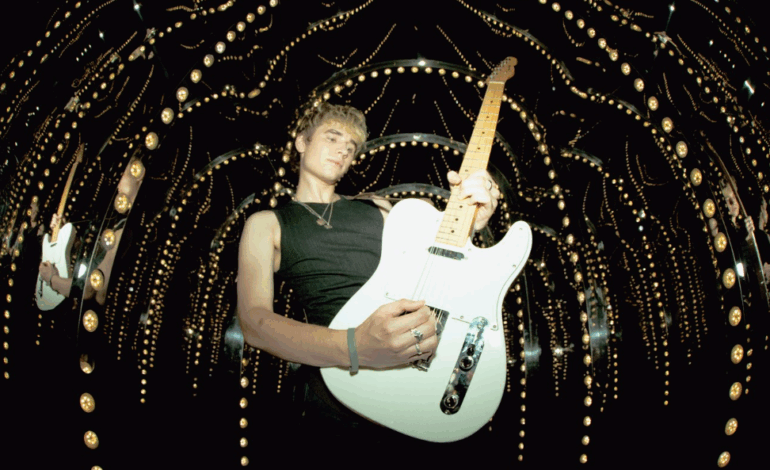
Toronto-based singer-songwriter Katie Dauson announces the release of her highly anticipated seventh studio album, Dauson City Gold Rush — an eight-track collection that blends rock, folk, blues, country twang, and yacht rock into a shimmering display of musicianship and heartfelt storytelling.
Can you take us back to the moment you realized music was your calling?
It was after I performed at my first open mic, a few years ago. I was extremely nervous about going up and performing some cover songs at the time, because I had never sang and played guitar in front of an audience before. I was also extremely overweight and feeling very down on myself. In fact, I was so nervous that I “dressed up” in cowgirl style Western gear to give myself a persona of sorts, to drum up some courage. And, when I was up there performing, I was so nervous I was terrible, but the audience was extremely nice and welcoming. They applauded after every song and were singing along to some of the covers I chose. I felt like a million bucks when I finished performing that night. I hadn’t felt that good in my life, maybe ever. It was then, that I thought, maybe I should continue with music, because I just had so much fun, even through the nerves.
Toronto has a vibrant music scene — how has the city influenced your work?
The Toronto music scene is not quite what you think. It’s very difficult for indie artists like myself to get quality bookings at good venues. Most of the venues are owned and operated by a single company that prefers to book its venues for artists who are signed to a label. There are a lot of open mics in the city (who a lot of uber talented people attend) , but it’s really hard to get a break. If I was living in the United States, and came back to Canada to perform in Toronto and elsewhere, I’d be welcomed with open arms, and my music would be played on Canadian radio. Canada, and Toronto in general have an inferiority complex when it comes to our own talent. I’ve had this debate with people in the Canadian radio industry, and they will never give me a straight answer regarding indie artists in Canada who are Canadian, like myself, who don’t get airplay here; they end up ignoring my arguments. I wish the music scene in Toronto was better in many respects, because there are so many talented people in the city, who don’t get recognized.
Your music blends rock, folk, country, and blues — how do you decide which genre a song will lean into?
It just a gut feeling, and so far I feel that I’ve been right.
You mentioned that your new album Dauson City Gold Rush evolved a lot during production — can you describe that journey?
It originally started out as a folk album that was going to be ten songs long. I had enough songs, and I had recorded one song, Daddy Long Legs (I really like that song), that I decided needed some blues in it. After that, I started getting inspired and writing better songs than the ones I originally had for my album. The album changed completely from there. The only song that I kept from my original album plan was in fact, Daddy Long Legs. Every other song was completely different. I felt that I didn’t want to be boxed into a single genre for an album, like how so many of the old time artists did it, and Dauson City Gold Rush came out a lot better because of that idea.
Songs like Sail With Me became family favorites — how do your personal life and relationships influence your music?
I actually try to keep my music life and my personal life separate. Although, there are times I do write about myself, it’s usually unconscious and I don’t often realize it, until after I’ve written the song.
If you could sum up Dauson City Gold Rush in three words, what would they be?
New old school.
Which track do you feel will surprise listeners the most, and why?
Gold Rush, because I’m known to write a lot of words, and this song is an instrumental. It’s a lot of fun and changes the album completely.
Who were your earliest musical influences, and how do they show up in your work today?
When I was growing up, my family did not have a lot of money, and so I couldn’t buy much in the way of music, such as CDs, or an mp3 player. I didn’t attend my first concert until I was an adult, which happened to be Paul McCartney. I tried as a child to get into the latest pop music of the day, but it just didn’t resonate with me. My peers at school and at camp thought I was really strange because of that. When I was in the car with my Mom as a child, she would play an oldies station on the radio, and I felt like that music connected with me a lot more. It wasn’t until early on as an adult that I started really listening to music. My first major influence was the Beatles. I love their music, and they are my favourite band of all time. They revolutionized modern music in so many ways. One of the best aspects of the Beatles’ music, and that of other great artists and musicians is that they told stories, which I like to do as well.
Is there a particular album or song in your discography that feels like a turning point in your career?
I would have to name three songs: I Wanna Rock, Twist Around, and Fool’s Gold. People really like those two songs from my second album, Full Nelson, and Fool’s Gold, the title track of my fourth album. I’ll never forget this: in June 2024, I was putting on a concert in Toronto’s East end, and I wasn’t expecting much. My first concert, in my hometown of Richmond Hill was very subdued. As soon as I got on stage in Toronto, though, the crowd, which was much bigger than I expected, started going crazy for my first song of the night, Moon Rock, and it just got better from there. I Wanna Rock was in the middle of my set, and I asked the crowd a question: “Do you wanna rock?”, and they went absolutely wild. When the backing music started (I didn’t have a band at the time) and I started playing my guitar, everyone got up, grabbed a partner, and started dancing. I actually had to play the song again at the end of the night for an encore because it was requested multiple timed by the audience. Twist Around is also another fan favourite. At that same concert, the whole audience was twisting to the song. As for Fool’s Gold, I remember in that same concert people asking me to play that song early on in the set, and I reassured them that I would play it. I play that song on mandolin. The crowd went wild when I played that song too. So, I know those are probably the three “turning point” songs. I always play those songs at my shows, because I know people really enjoy them.
How has performing live shaped the way you write and arrange your songs?
It doesn’t. I don’t write my songs for concerts, I write them in the moment, and if I feel they’re good enough (a gut feeling), I will go and get them recorded at the studio to put them out either as a single, or as part of an album. I think if I tried to write everything for performing live, it would box in creatively.
FACEBOOK | INSTAGRAM | SPOTIFY | WEBSITE
PR sent to us by Decent Music PR