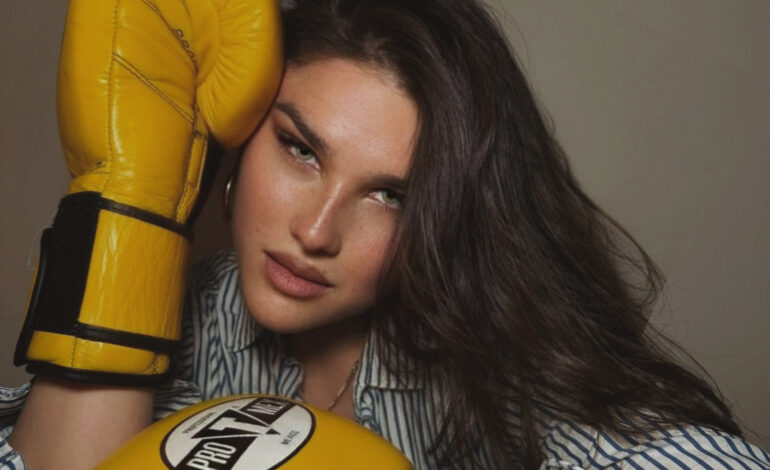

Gab Gordon is crafting a musical world where intimate storytelling meets cinematic scale, especially with her latest single ‘Slowburn’. Raised in a deeply musical household outside Philadelphia, Gordon’s creative path has been shaped by an eclectic mix of influences—from classical piano training and classic rock icons to engineering studies, competitive rowing, and a fascination with sound design. The result is a distinctive artistic vision that blends rich melodies, immersive production, and a carefully curated visual aesthetic.
As an independent artist, Gordon approaches music as more than a collection of songs. Each release forms part of a larger emotional landscape, drawing inspiration from film, fashion, nostalgia, and the subtle textures that shape how we experience sound. Whether she’s experimenting with custom guitar pedals, building expansive sonic atmospheres, or exploring the relationship between image and music, her work reflects a commitment to creating experiences that feel both personal and transportive.
In this conversation, Gab Gordon discusses her earliest musical memories, the influence of classical training and engineering on her creative process, the inspiration behind Slowburn, and her vision for the immersive artistic world she continues to build.
Growing up in a musical household just outside Philadelphia, what are some of your earliest musical memories?
One of my earliest musical memories is waking up on Sunday mornings and hearing my dad play guitar. I remember hearing him play the “Rebel Rebel” riff and being completely fascinated by it. Music was always present in our house, whether it was someone playing an instrument, talking about a song, or introducing me to a new artist. My family made music feel less like a hobby, and more like a natural part of everyday life.
How did classical piano training shape your melodic instincts and songwriting style today?
Classical piano training gave me a strong foundation in structure, harmony and music theory. It taught me what works, how melodies interact with chord progressions and how songs have been built. At the same time, I believe the strongest melodies are often instinctive. The technical training gave me the tools, but instinct is what guides the songwriting.
You studied biomechanical engineering in college. How has that technical background influenced your approach to music production and sound design?
Engineering taught me how to approach problems and hold onto curiosity throughout the process. Music production is essentially translating an idea into a tangible form, and engineering gave me the confidence to experiment until I find a solution. I think creativity and technical thinking are very much connected. One helps generate ideas, while the other helps bring those ideas into reality.
Your interest in resonance and sonic texture eventually expanded into custom guitar pedal design. What fascinates you most about shaping sound at that level?
What fascinates me most is how small adjustments can completely change the emotional context of a song. A subtle change in texture, saturation, or resonance can make all the difference in the presentation of an instrument. I’ve always been interested in atmosphere, and designing sounds at that level because it feels like another pathway to shape the sound into what’s needed.
You’ve mentioned that your time as a Division I rower influenced your songwriting process. How did those quiet mornings on the water affect your creativity?
There was a lot of quiet reflection built into those mornings. Rowing requires repetition and focus, but it also creates space for your mind to wander. Some of my earliest songwriting ideas surfaced during long steady state practices because there were very few distractions. Looking back, I think those moments taught me the value of stillness and how creativity appears when you’re not actively searching for it.
Your music balances intimacy with cinematic scale. How do you approach creating songs that feel emotionally personal while still sonically expansive?
I usually start with a feeling or memory and then build a larger world around it through production. The emotional core of the song remains intimate, but the instrumentation, and textures, help expand that feeling outward. I’ve always loved music and films that make small moments feel larger than life, and I think I strive for that in my work.
Artists like Lana Del Rey, Weyes Blood, and Chappell Roan are often mentioned alongside your work. Are there other artists or influences that have shaped your sound?
Absolutely. I grew up listening to artists like David Bowie, Prince, The Rolling Stones, Fleetwood Mac, Bruce Springsteen, ABBA, Elton John, Queen, and The Beatles. I’ve always been drawn to artists with strong melodic instincts. Beyond music, film has probably been one of my biggest influences. Everything from Hitchcock films to John Hughes movies have shaped the way I think about atmosphere, storytelling, and emotion.
Your visual aesthetic draws heavily from retro glamour and vintage editorials. How closely connected are your visual concepts and songwriting emotionally?
For me, visual storytelling and songwriting are really different ways of communicating the same emotion. Often the visual world begins forming while I’m writing the music. Fashion, photography, cinema, and music all work together to create a larger emotional experience. I’ve always been interested in building worlds rather than presenting songs in isolation.
As an independent artist handling so many creative roles yourself, what have you learned about trusting your own instincts?
It’s definitely been a process. If you’re responsible for every creative decision, you have to learn to trust your intuition, yet still remain open to growth. I’ve learned that instincts are often worth listening to, especially when they consistently point toward a specific creative direction. Some of my favorite moments in music have come from following an idea because it felt right before I could actually explain why.
Looking ahead, what excites you most creatively about the direction your music is heading?
What excites me most is the opportunity to create a larger artistic world around the music. I’m interested in combining music, visuals, and design into something immersive. My upcoming work feels very cohesive creatively, and I’m excited to continue building experiences that people can step into rather than simply listen to.