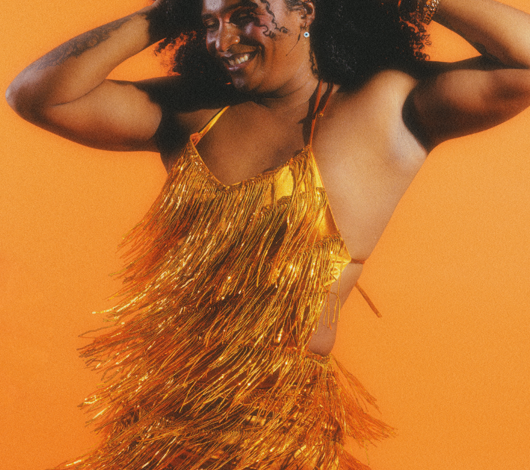

Fate Envoy is an alternative/indie-rock band from Highland, New York, in the Hudson Valley. Comprised of Eric Anderson, Ari Bayvertyan, Andres Ellis, and Ian Ogana, the band combines urgent guitars and cathartic vocals with influences ranging from The Strokes, Arctic Monkeys, Radiohead, System of a Down, and Interpol. Their debut album, The Tower, uses the Major Arcana of the Tarot as a discovered narrative structure for a story of crisis, transformation, and chosen human connection.
- The concept behind The Tower is particularly unusual because the Tarot framework was discovered within the songs rather than imposed on them. Can you take us back to that moment of discovery with the Major Arcana? What did it feel like to realise that the songs you had already written seemed to be telling a story you had not consciously planned?
Ari and Eric have a shared appreciation for philosophy and interpreting symbolism, especially when analyzing music and art in general. So once most of the songs on the Tower had been fleshed out in terms of composition and some lyrical arrangement, Ari decided to make the case that each song could be associated with the archetypal themes of particular Major Arcana tarot cards. And, if the songs/corresponding cards were placed in a particular order, they would create one hell of a “Hero’s Journey” – an individual transformation almost anyone could relate to. Ari laid each card out on his couch one by one and the story told itself, centered around the Tower card as the climactic peak.
Songs like War is Hell aligned cleanly with the dreaded Death card while the repeated chant of “Armageddon” in the breakdown & frenzied guitars of the track that became The Tower perfectly fit with the utter collapse that card represents. Lightning is all about transcending polarized ways of thinking, and avoiding unnecessary conflict so the Hanged Man card was perfect to express those ideas. I Can Barely Talk naturally reflected the Hermit’s withdrawal, while A Moment in Eternity carried the awe and renewal offered by the Star card.
Ultimately, we recognized that the timeless story of growing through hardship into an authentic self was revealing itself through the proposed placement of the songs/cards. The songs seemed to know something about their relationship to one another before we did. It really changed the way we understood the act of songwriting itself. There is the conscious intention you bring into a song, but there can also be patterns emerging beneath that intention—psychological or archetypal patterns that only become apparent when letting a song speak for itself. The Tarot gave us a potent language for recognizing what the songs were saying to us both individually and as part of a larger artistic statement.
- The album follows a striking emotional progression from uncertainty and disorientation through collapse, solitude and eventually reconnection. When you listen to The Tower as a complete work now, do you hear it differently from when you were writing the individual songs?
The way I hear these songs now as a complete album has definitely broadened their meaning beyond what they were as individual tracks when we first wrote them. Sonny’s Party is still a feel-good pop-rock jam that I’ll listen to for a nostalgic mood lift, but when the song’s outro leads directly into Grandfather’s foreboding jangly minor chord intro, it encapsulates that transition from a farewell to innocent youth (The Fool) to the inevitable confrontation with mortality and the ancestral call of the Judgement card. The album is full of resonant transitions, especially between The Tower, War is Hell & I Can Barely Talk — one song’s ending sets the emotional stage for the next.
- The title track represents The Tower, the moment when established structures collapse and hidden truths are exposed. What does that archetype mean to Fate Envoy personally, and why did it feel like the right centre point for the album?
The Tower card is frightening because it represents the destruction of structures we depend upon—but the deeper meaning of the card is that those structures were built on illusions/lies we tell ourselves and false promises of stability/security.
The Tower is not destruction for destruction’s sake. It’s what happens when reality becomes so intense and overwhelming that the architecture we have constructed with old concepts or notions of what is true no longer suffices to make sense of what’s happening around us. That architecture might be a relationship, an identity, a belief about ourselves, an institution, a future we assumed we were going to have, or simply a way of interpreting our lives. The lightning strike exposes the difference between what is real and what we merely hoped would remain permanent.
That made it the natural centre of this record, and uncannily, “The Tower” is literally the fifth song of nine—the central card of the entire sequence. Everything before it feels like movement toward that confrontation. Everything afterward deals with its consequences.
For Fate Envoy, there is something deeply creative about that archetype as well. A band itself has to survive versions of The Tower: people entering and leaving your life, ideas about what the project was supposed to become falling apart. The question is whether collapse means the end, or whether it reveals the material from which something more authentic can be built.
That is also part of what the name Fate Envoy means to us. An envoy carries a message. The Tower is the moment when the message can no longer be ignored and life will never be the same after.
- There is a fascinating contrast between the album’s darker themes and its ultimately hopeful conclusion with “This Dance.” How important was it for you to make the record about what comes after destruction rather than simply about destruction itself?
It was essential for us to create this record following both the process leading up to and after the Tower’s collapse. Especially living in a post-2020 world when these songs were written (late 2020 into 2021/22), it felt like the entire world was undergoing a Tower moment, as institutional structures were shaken to their core and ordinary expectations about the stability of those institutions and the way people interacted with one another were radically altered. The songs that follow the Tower’s collapse mirror the reckoning we felt both individuals and society had to undergo—to process that trauma and hopefully emerge wiser and more heart-centered.
There is an understandable fascination with collapse because collapse is dramatic. The Tower is one of the most visually violent cards in the Tarot. But destruction by itself is not transformation, and the real work to become an authentic and empowered individual begins after a terrifying ordeal.
That is why the final four cards are so important to the meaning of the album. The Tower is followed by Death, then the Hermit, then the Star, and finally the Lovers. You lose something. You withdraw. You begin to see a light again. Then you have to decide whether you are willing to return to the world.
“This Dance” matters because the ending is not a triumphant proclamation that everything has been solved. We were much more interested in something fragile and human. After disillusionment, can you still allow yourself to care? After seeing how temporary things are, do you become cynical, or does their impermanence make them more precious?
The hope at the end of The Tower therefore had to be earned. The record does not say that suffering automatically makes people wiser, or that every destruction secretly happens for some convenient reason. It asks whether something can be created from what remains. The answer offered by “This Dance” is that one of those possibilities to create something lasting in this life is through human connection and love. There is immense courage in remaining open to life after you have acquired justified reasons to close yourself off.
5 – What do you think each of your influences has taught you about songwriting, and how do you make sure they become part of your musical vocabulary rather than simply sounding like references?
The Strokes & Arctic Monkeys were major influences on Ari’s songwriting style, and you can hear them come through especially on songs like Sonny’s Party, Unforeseen Circumstances & Lightning. Even in Ari’s guitar solo on the outro of War is Hell, you can hear that Strokes-inspired tone and style to really pull out the emotion. The rhythm and lead guitar interplay of these two bands and others (Franz Ferdinand) from the early 2000s exemplify our riff-driven melodies on the album.
Interpol taught us a great deal about atmosphere and tension, there’s an enchanting, hypnotic vibe in their music that appeals to the band. Their style and flow is influencing what comes after The Tower in a big way.
System of a Down demonstrates how dramatically contrasting musical ideas can coexist inside the same song. Extreme heaviness, unusual rhythms, melodic beauty, absurdity, political passion, theatrical vocals and incredibly memorable hooks can all appear beside one another without cancelling each other out. That freedom is incredibly inspiring and you see this influence in songs like War is Hell, The Tower & A Moment in Eternity.
Radiohead represents the permission to follow a song somewhere strange. Harmony, texture, dissonance, unconventional structures—none of those things need to exist merely to prove that you are experimental. Radiohead is adept at communicating an emotional condition that conventional rock vocabulary cannot quite reach. Our songs have some quirky, unexpected transitions, and we believe surprises that are sensible enough within the framework of a song can make for some unique, novel music that Fate Envoy is aiming to create. You can hear that in Grandfather, which moves abruptly from its darker minor-key center into the relative major, mirroring the song’s shift from fear around mortality toward a more hopeful acceptance and faith in something that transcends the material world.
The challenge with musical influences is to absorb the underlying principles of these bands rather than reproduce the surface characteristics. We are not sitting down saying, “Let’s write an Interpol song” or “This needs to sound like Radiohead.” Once an influence has actually entered your musical vocabulary, you stop consciously quoting it. It gets mixed together with every other influence you have, with your own equipment, your own limitations, your own personalities and—most importantly—the experiences you are trying to communicate.
Between Eric and Ari’s guitars and voices, Andres’s drumming, Ian’s bass and engineering perspective, and the particular sounds we have developed through our guitars, amps, pedals and recording methods, those influences pass through enough different filters that the end result becomes Fate Envoy. Influence should be less like tracing someone’s handwriting and more like learning another language well enough that eventually you can say something of your own without being reduced to sounding like X band.
- Fate Envoy has a distinctly Hudson Valley identity. How has living, working and making music in Highland, New York shaped the band’s sound, creative outlook and sense of community?
Fate Envoy has never really emerged from the idea of trying to insert ourselves into a particular music scene. To be honest, Eric’s teaching job and advising of the Guitar Club is a major part of the local music community Fate Envoy has grown from — Ari met Eric in late 2020 because his wife was student-teaching at Eric’s school. Andres was introduced to the band in 2021 because his sister was taking lessons with Eric at the local rec center in the town he teaches in. Eric’s job essentially brought the entire band together!
That has contributed to the band’s independence. We have had the space to develop our own musical language without constantly asking whether it corresponds to what another local scene or current trend expects a band to sound like. We can obsess over guitar sounds, experiment with arrangements, construct a studio, write strange songs, connect those songs to Tarot archetypes and let the project become whatever it naturally wants to become. Eric’s students provide excellent feedback as young musicians passionately engaged with honing their craft and taking in new influences all the time. That organic, tight-knit rural Hudson Valley community may be quieter than building a band through the NYC club circuit, but it has enabled us to develop a distinct sound and creative outlook.
- Ian Ogana’s journey from being one of Eric’s students and a member of the school Guitar Club to becoming a member of Fate Envoy is an unusual part of the band’s story. How has that relationship evolved musically and personally over the years?
Ian: I believe it has developed my personal playing and writing ability as well as our fundamental relationship which was originally based around music. Coming from mostly playing covers with other musicians, Guitar Club was a refreshing way to involve myself more seriously in what I already loved doing–playing music. Over the time spent in Guitar Club to now, where I am one of the main integral influences in Fate Envoy’s sound and production, it has definitely deepened the connection I have with my band mates.
Eric: I remember at the end of the first Fate Envoy/Guitar Club show at a standing-room-only Masonic temple in the town I teach in the winter of 2022 — Ian had attended and wasn’t playing with the club yet — I stood at the entrance of the hall and told him he could and should be a part of what we were building here. And I feel like he just committed to guitar and deepened his connection to music and embracing performance and collaborating with other musicians.
Ian had already been making beats and excelling in the award-winning school jazz band as a multi-talented musician who could play piano and drums well before joining Guitar Club. I respected the seriousness he approached music and the study of both playing it, writing it and producing it. It wasn’t long before Ian was explaining things to me and advancing my knowledge of music theory or proper equalization to attain the best tone not only to my ears but in a full band mix. It was a remarkable experience of the student embracing the opportunity provided by a teacher to become a confident leader and teacher in their own right built from a talent they possessed innately and sought to further develop.
The band jokingly says how Ian must have been with us in spirit when we wrote the music for the album since he so intuitively knew what to add with the bass parts to complete each song.
- You built The Forge, your own recording studio, by hand in 2025. What did constructing the physical space teach you about the way you wanted to record and produce music, and did working in your own studio change the final character of The Tower?
Building The Forge reinforced the idea that recording is not a separate stage that happens after the creative work. We have always been interested in the physical side of sound—different guitars, pickups, amplifiers, speakers, pedals, gain structures, routing, room sound and the interaction between all of those things. Building our own space gave that instinct a permanent home. The Forge is also a practice space, but it’s really a laboratory. Rather than vaguely remembering that one combination sounded better than another, we could compare things deliberately, document what worked, repeat signal chains and understand why a particular guitar or amplifier belonged in a particular part of a song, or why one mic placement was better than another for capturing the snare sound we’re looking for.
There is also something symbolically appropriate about the name. A forge is where raw material is subjected to heat and pressure until it becomes something more deliberate. That describes recording surprisingly well. A song arrives with a certain instinctive energy, but producing it involves discovering which elements are essential, which need to be removed, and what form this idea is actually trying to take.
Having our own studio therefore became part of the character of The Tower. It also changed the way we think about the future of the band. It isn’t simply somewhere we made one record. It has become the ongoing workshop where we can keep refining our sound rather than having to reinvent the recording process every time we begin another project.
Ian on The Forge & recording The Tower: Building our own space out with the sole purpose of recording allowed all other distractions to be set completely aside and we were effectively able to focus only on music. Whether it be writing, composing, production, or developing methods of recording better quality sound, it was all made possible by the cultivation of The Forge.
Personally, it was my first go-around on mixing recorded instruments. Recording so many separate takes over months, around everyone’s full-time jobs, made total consistency and cohesion hard to chase – but the songs still came through the way we meant them to. Since then, my understanding of sound engineering and mixing has improved tenfold, and I think the next songs we release will show that improvement clearly.
- The album is accompanied by The Reading, a 42-page document that expands on the Tarot cards, lyrics and rituals associated with each song. How do you hope listeners engage with that material? Is it something you want people to read before listening, after listening, or discover gradually for themselves?
I think there’s a lot to gain from The Reading however listeners choose to engage with it, either before or after listening to the album. It provides the listener with a narrative that ties the details of the songs into the deeper meanings of the tarot cards themselves, and how each card represents a vital part of the audible journey the listener embarks upon with The Tower as a whole. Some songs/cards will naturally resonate with listeners in similar phases of life or who identify with particular archetypes.
We wouldn’t want The Reading to become an instruction manual telling somebody what they are required to experience when they listen to the album. The songs have to survive without any explanation at all. Someone should be able to hear “Lightning,” “War Is Hell” or “This Dance” knowing absolutely nothing about the Tarot framework and still connect with it musically and emotionally. But if a listener senses that there is something underneath the record and wants to go further, The Reading opens another level. The document explores each of the nine songs through its corresponding Major Arcana card, the lyrics, symbolism and associated contemplative or ritual dimension. In that sense, the album functions differently depending upon how deeply somebody chooses to enter it.
We particularly like the idea of somebody hearing the album first and only later discovering the document, because then they can compare their original intuitive response to the symbolic structure we discovered ourselves. Tarot is powerful precisely because a card never collapses into a single definition. The symbol gives you somewhere to look, but what you find there depends partly upon the person doing the looking. We hope the album works the same way.
- The final song, “This Dance,” represents The Lovers, but you describe that archetype as a conscious decision to remain vulnerable and connected rather than simply an idealised romantic relationship. After everything the album goes through, why did chosen human connection feel like the right place for The Tower to end?
The Lovers card gets flattened, culturally, into a card about romantic spark, the initial rush. That’s not the deepest reading, and it’s definitely not This Dance. In deeper esoteric readings of The Lovers, the card concerns choice as much as romance — the kind of relationship or commitment that actually asks you to grow. That’s beyond simply falling in love. It’s closer to a vow — as this last song reveals one must be willing to stick it through the collapse of the Tower & Death cards to access the purifying renewal one surrenders to in The Hermit & The Star cards. Now one can humbly embrace the weight of their vows, and embark on a lifelong commitment not only with a beloved other, but with themselves and the beauty of life around them.
The answer isn’t that another person rescues you from everything that came before – it’s not a simple “happily ever after.” It’s that after confronting uncertainty, loss and solitude, you can consciously choose to love not only another person, but to appreciate life and embrace the ability to love enthusiastically even while living in an imperfect world that may hurt us and leave us scarred. It says that impermanence does not make connection meaningless; rather, it is what gives connection its urgency and necessity.
So The Tower begins with a world that cannot quite be understood through The Moon, The Hanged Man and The Fool. Grandfather and the angel’s call of imminent Judgement then become the album’s pivot toward an authentic connection with one’s self and roots, before the harrowing ordeals of the Tower’s fall and War is Hell’s death and rebirth experience. The album finally reaches its conclusion not with the enlightening wisdom provided by The Hermit or The Star, but with The Lovers entering the great dance and living life one day at a time despite everything they now know and went through.
That felt like the only honest place to end the record. To survive the Tower and rebuild on an authentically solid foundation means finding your purpose, connecting with something real in yourself, and sharing that with the people you love – cultivating, in whatever small way, a saner and more fulfilled world.