
Los Angeles-based artist Dolce Wang has released her new album Any Other Way, an emotionally rich collection of shoegaze, indie folk and electronic dream pop that treats vulnerability as a source of strength. Named after the musical term meaning “sweetly”, Wang trained for years as a classical cellist before quietly teaching herself guitar, drums and synthesizers, and her career has taken her from Carnegie Hall and the Tokyo Olympics to a stint as a Walt Disney Imagineer. Written over more than a decade while travelling through the United States, South America, Eastern Europe, West Africa and Asia, the record features Serbian drummer Serge Milenkovic, Yugoslavia-born bassist Aleksandar Sasha Panich and Taiwanese violinist Edith Lin. We caught up with Dolce to talk about upside-down maps, Belgrade, the cello as an extension of the spirit, and what comes next.
The title Any Other Way suggests a reflection on alternative paths and the choices we make. You’ve described the feeling of walking a map that had already been drawn, only to realise you were holding it upside down. Can you take us back to that moment of realisation — when you understood that the life you were living might not be the life you were meant to live? How did that shift influence the songs on this album?
There have been many moments, not just one, that have resulted in this very non-linear journey. Learning to play an instrument wasn’t much of a choice when you are named after a classical music term. Imagine a 6-yr-old Taiwanese tomboy with a bowl cut in Texas, carrying around a 1/16th cello onto the school bus as her primary seat buddy. The life set for me was the discipline of practicing, performance or competition prep, forbidden to see friends or listen to music of other genres.
At home was a traditional Taiwanese household that had contrasting rules, values, and language from the culture outside. Meanwhile I was silently running amok through the Buffalo Bayou in a child gang. Then that same kid, at nine, became her mother’s caretaker for what was later diagnosed as early-onset dementia.
I had to make many decisions about who I was versus what the world thought, before I even had words for it. I learned how to listen intently to those around me, through their verbals and non-verbals, as well as my own inner voice. That combined with a healthy curiosity, a lot of trial and error, plus a little Southern sass, got me pretty far.
The outside world told me that the correct path was to get good grades, go to a good university, get a good job, get married, buy a house, and have kids. And there’s nothing wrong with that at all – I just knew it wasn’t for me.
My rebellion against music was to go to LA and study Mechanical Engineering and Film. Right after I graduated though, my father passed away, and I was expected to be the breadwinner for the whole family. I had offers from big engineering companies… yet I remember declining them, one by one, stomach churning, listening to an internal voice that told me that while there was a reason for my training, this was not my path. I still took on my responsibilities seriously – I am still my mother’s caretaker till today – but I think that was a pivotal moment in my life, where I committed to finding a different way to doing things, even without any clear answers, external security, or models in my life.
It felt very isolating at the time, especially because my decisions and the circumstances of my youth were very different from my peers. But as time went by, I realized a lot of the tragedies and challenges of life were the things that connected me to others, and allowed me to cut very quickly beneath the surface. I realized playing music for and with others was like creating a portal to opening up conversations, and therefore a sense of belonging to each other despite language. Every place taught me something about what people carry in common, what they longed for as well as what they grieved for. I believe every one of those conversations lives in this album… and why it is named “Any Other Way.”
The album was written over more than a decade, across the United States, South America, Eastern Europe, West Africa, and Asia. How did living and travelling through these different places shape the sound and atmosphere of the record? Were there particular locations that inspired specific songs, or did you find that your approach to writing changed depending on where you were?
I wrote and recorded the demos in over a dozen places while traveling – the Ozarks, Tibet, Colombia, Ghana, Bangladesh, Taiwan, Shanghai, Japan, Serbia, Romania, Turkey, plus time in California and Texas. The album was never meant to point at any one region from an ethnomusicological standpoint. The influence is more about movement, the blending of perspectives and sound as I moved through each place.
“Belgrade” has the most direct geographic fingerprint. I visited while my drummer, Serge, was there on his annual trip home — after twelve years playing together, I realized I knew almost nothing about where he’d grown up. While walking past remnants of bombed buildings from the ’90s civil war, gypsy music drifting from a nearby restaurant, he told me for the first time – in classic dark Serbian humor – what it was like living through that. His resilience, and the stories his friends carried, went straight into that song.
Every song on the record has some cross-cultural thread, though. “If You” is a bilingual love song written for my community in Taiwan, leaning into my cross-cultural upbringing. I wrote it while I was deciding to move back to the US, after years of watching that community express tenderness almost entirely through action rather than words.
That feeling of unspoken tenderness shown began to infuse with a nostalgia I didn’t expect, thinking back to the years of learning guitar by jamming with friends. Around that time I was listening heavily to Dolly Parton, whose loss still feels enormous, studying how her sound moves between simplicity and depth… which led to “Find Your Smile.” Later, back in the US, I ended up covering “The Joke” after a trip to the Ozarks, where I made friends with locals in Shell Knob through music and experiencing the Dolly Parton Stampede show.
Through the process, I challenged myself with the idea of profound simplicity – the idea of not overcomplicating life, of remembering to “Be Alive.” That shows up in the sound itself too: hypnotic, repeating chords, lyrics pared down but still layered, built the way old songs used to be built. Travel taught me we’re all carrying similar truths under our differences, and facing them directly was some of the hardest, most necessary work on this record.
Your music brings together classical cello, shoegaze, indie folk, and electronic dream pop in a very distinctive way. How did you arrive at that combination? How did you bring your classical training together with the guitar, drums, and synthesizers you taught yourself to play? Did these different musical identities ever feel at odds, or did they naturally become part of the same creative language?
I grew up in a musical bubble where anything outside classical, including drums and guitar, was basically forbidden and considered “the devil.” Ironically, I met “the devil” at church: I auditioned to be a drummer after secretly teaching myself Weezer’s “Pinkerton” album on chopsticks at 2am. That led to playing drums in a high school band, the church worship team, and eventually guitar. Friends who struggled to learn new songs would let me play on their instruments if I figured out the parts, and we’d just sit around playing for hours.
When I left for LA at 18, I was thirsty to learn all kinds of genres, mostly in silos at first. I taught elementary school kids rock music without even knowing who the Beatles were, then fell hard for ’60s Brit rock. I learned bossa nova and classical technique by ear by jamming with a guitar major in school, then got hired across hip-hop, bluegrass, funk, and film scoring. Eventually I joined a rock band for over a decade, where I finally merged cello with effects and pushed how cello and guitar could voice together.
Asia was the real turning point, touring Mainland China, Japan, and Taiwan, I noticed audiences listening completely differently than I was used to: intently, into the quiet and the subtle. Later, stranded in Taiwan during the pandemic, I found that same stillness again.
I’d been assigned in the region originally through Walt Disney Imagineering for Shanghai Disneyland’s intense final year of construction. With no band left, it came down to a simple choice – sleep, or play music. I chose music. But performing solo meant I had to sing, so I started singing more, weaving it with cello and guitar as separate voices, experimenting with beats, until a consistent sonic identity finally emerged.
Everything on this album is the culmination of years of different musical identities eventually forming into my own sound.
You brought together an international ensemble for the record, including Serbian drummer Serge Milenkovic, Yugoslavia-born bassist Aleksandar Sasha Panich, and Taiwanese violinist Edith Lin. How did those collaborations come about, and how did each musician’s background influence the album? Did any cultural or musical differences lead to unexpected ideas or discoveries during the recording process?
Although I recorded demos for all the parts, they were meant to serve more as emotional direction, leaving room for each musician to find their own expression.
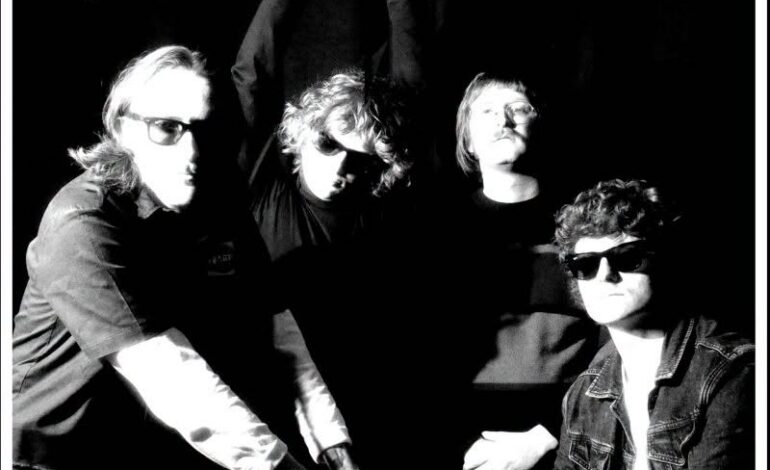
Serge and Sasha both come out of long-haired rock bands, with Sasha also carrying some Latin influence from years living in Mexico. It was natural for them to lock in the groove together, and it changed several songs in the process. “If You” was one of the biggest surprises – it started sparse and floaty, all ethereal strings, until Sasha’s bassline turned it more driven and sultry, and we layered reverb-heavy drums with an improvised ending to emphasize that personal feeling.
I’ve played with Serge for over fifteen years now, first in our old band, now in this solo work. Sasha, I actually knew by ear before I knew him in person – he played remotely on some earlier singles during the pandemic. Edith and I used to play together in a quartet just for fun, and this album was her first time improvising outside a symphony orchestra setting – I loved getting to unleash that same creative instinct in her that music once unlocked in me.
“Belgrade” took some nerve to bring to the group — Serge is a rocker at heart and has a complicated relationship with the traditional gypsy music of his own upbringing, so I was nervous handing him my interpretation of it, filtered through my own sound. It ended up being one of our strongest moments together. “Time Once Again” took a totally different approach, built on loops and slow-building angst. “Paper Tiger” was pure fun — four of us jamming until it sounded like a scrappy, dirty blues band.
What surprised me most, though, wasn’t musical — it was cultural. The camaraderie, the humor, the sheer excellence everyone brought just felt like a real band, which is rarer than it should be these days.
You took on both the role of recording artist and producer on Any Other Way, alongside Aleksandar Sasha Panich and Serge Milenkovic. How did you approach that dual role, and how did the creative responsibilities evolve in the studio? Did your experience in immersive entertainment and installation art influence the way you thought about producing the record?
The approach to producing this album certainly had parallels to my work in immersive entertainment. At Walt Disney Imagineering, I was brought on as a Creative Director for Pirates of the Caribbean and Treasure Cove at Shanghai Disneyland largely because of my music background, to blend the extraordinary work from 140 disciplines into one coherent emotional experience, with thematic continuity running through an entire land.
Recording is the same instinct for me: writing, re-listening, refining the sonic language — it’s iterative, like design work. I think of the demos as concept art, the effects and synths as experiential atmosphere, each song with its emotional arc, and the album as an overall experience as well when listened from beginning to end.
Practically, we were a tiny DIY team, so everyone wore multiple hats out of necessity. Once I had full demos written and recorded, I brought in Serge and Sasha, and the three of us rotated roles. Sasha and I set up a makeshift home studio at a friend’s house, kluging together whatever gear we could find to record bass and drums. I then re-recorded nearly everything else and blended it all together. From there, the three of us mixed and mastered – Sasha as lead engineer, all of us shaping the final details.
All of that built directly toward the live debut, which only made sense as a full immersive album release show.
The cello is at the heart of Any Other Way, functioning as both an emotional anchor and a textural element alongside the electronic sounds. Can you tell us about your relationship with the instrument and how your voice on the cello has evolved over the years? What does the cello allow you to express that another instrument might not, and how did you explore its possibilities differently on this album?
My relationship with the cello was love-hate for a long time. Looking back, my technique developed faster than my own maturity did – guitar was different, because I taught myself out of pure passion, on my own terms.
A big shift happened during a live looping piece I’d written for cello and a contemporary dancer. In the moment, I was mostly focused on the technical side, making sure I hit every pedal, every loop, correctly. Afterward, people came up to me in tears, telling me deeply personal stories, saying they’d felt catharsis, even something transcendent. That’s when I understood I needed to take the instrument more seriously – it was doing more for other people than I, alone, ever could.
Since then, the cello has stopped being just an instrument — it’s become like an extension of my own spirit. I’ve explored its overtones, harmonics, layered effects – like a color palette, mixing sounds to reach for hauntingly beautiful sadness, tenderness, anger, and a range of emotions. The cello can scream. It can lay down a beat. It can conjure a bed of sound you’d swear belonged to a creature from another world.
On this record specifically, I leaned into being direct with the cello in all its voices, letting it guide the emotional foundation of every composition, rather than sit underneath it.
Your career has moved across some fascinating creative worlds — from performing at Carnegie Hall and the Tokyo Olympics to working as a Walt Disney Imagineer and Chief Creative Officer at Fantasy Works Interactive. How do these different experiences inform one another? What have you learned from moving between music, technology, immersive entertainment, and installation art? Have you ever felt you needed to choose between these different paths, or have you always viewed them as connected?
I think society happens to subdivide different disciplines, especially when it comes to science and art, but I’ve always experienced them as variations upon a theme. I have always believed that the same part of the brain used for creative breakthrough is the same as technical innovation.
Practically speaking, yes, every project demands a different recipe of skills and focus, depending on the form factor. But they were always interwoven – oftentimes in surprising ways.
You’ve spoken about vulnerability as a source of strength in your music. How did you come to see vulnerability in that way, and what has it been like to share such personal experiences through your work? Were there moments when you questioned whether you were revealing too much, and if so, how did you move through that feeling?
Sharing personal stories publicly still creates real tension in me, for a lot of reasons. There’s the cultural framing of vulnerability as shameful or weak. There’s the mutism I grew up with, as well as being physiologically tongue-tied. There’s silence as a survival strategy in an immigrant household, sitting in sharp contrast to how America rewards extroversion. And there’s social media, where vulnerability and oversharing can just as easily be used tactically as sincerely. I’m far from comfortable with any of it – at one point I genuinely wanted to make an account called “Don’t follow me!”
What changed things was realizing that part of my job as an artist, though, is to be a steward of vulnerability. That in the right context, it offers healing, courage, permission to feel, and visibility to voices that don’t usually get heard. Once I understood that, I started giving myself permission too. I still wrestle with it. But when there’s a purpose behind it, the fear becomes less and less relevant.
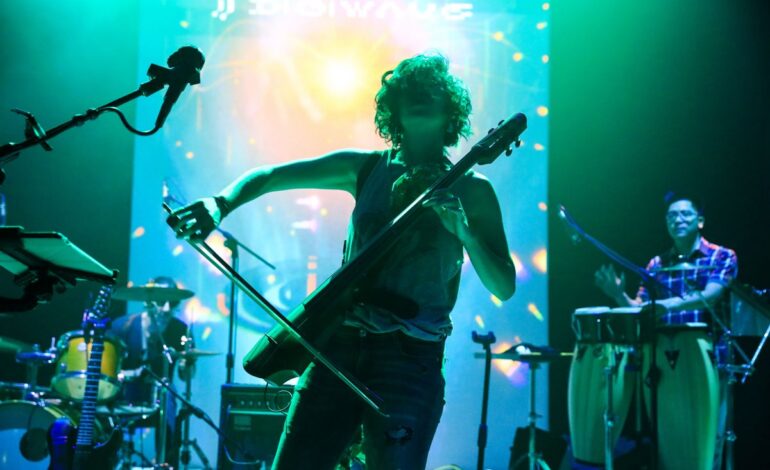
Your live performances combine guitar with a custom electric cello rig, while your upcoming immersive concert experience at Venia Studio will bring together ambient soundscapes, installation art, mixed media, and fashion. How do you translate the intimate and layered world of the album into a live experience? And what do you hope audiences feel or discover in that environment that they might not experience simply by listening to the record?
The immersive show at Venia Studio turned out exactly as I’d envisioned. Working with Anima Initiative and my own collective, Bravewyld, we took a space that’s normally a fashion store in downtown LA. I told the team our goal was to stop time, and create a portal of respite for the guests.
For the Pre-Show, we turned the store into a forest clearing for the weary traveler, inviting local artists who’d spent time listening to the album and interpreting it through soundscape, installation, and fashion. This served as a prelude to the live performance itself, to prepare them to listen in a different way than a typical venue or bar in LA.
Then for the Main Show, we took them on a full-on journey of the album by performing an hour-and-a-half set with projected visuals. It felt like we levitated the room both nights, and so many personal stories have come out of it since then. More than one person has told me they can’t listen to the album anymore without landing right back into the live event. And that’s the whole idea – to create a different way of experiencing music.
After more than a decade of travelling, creating, and exploring, Any Other Way feels like the culmination of a significant chapter. Now that the album is finally being released, what feels possible for you on the other side of it? Are there new musical directions, creative disciplines, or territories you’re particularly excited to explore next?
I’m genuinely over the moon – “Any Other Way” has been submitted by a GRAMMY member for consideration in Best Alternative Music Album and Best New Artist! I wrote this record purely for the sake of the expression itself, so this part was never something I let myself expect.
There’s still work ahead on this album: performances, CD and vinyl production, and an immersive VR shoot for Apple Vision Pro. A few other immersive projects are in motion as well. I can’t share much yet – but one involves a dragon, a few live in the wellness and neuroscience space, and music runs through all of them.
And I’m eager to start the next album. I’ve got over 300 demos sitting in a “song ideas” folder – mostly music with no words yet, so if there are any lyricists out there, I’m always open to collaborating.
Instagram, Facebook, Bandcamp, Apple Music, Spotify, Website | PR: Decent Music PR