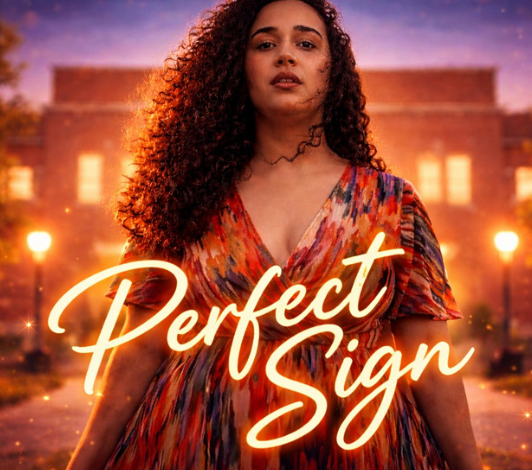

In a musical landscape where vulnerability often meets polish, DBsock is carving out a space that feels both intimate and quietly subversive. Splitting her time between China and the United States, the genre-blurring artist fuses silky R&B with art-pop textures, creating soundscapes that linger like half-remembered dreams. Her latest single, “worse,” is a hypnotic meditation on emotional entanglement—an exploration of toxic love that captures the dizzying pull of attachment long after clarity has slipped away.
With its heavy, deliberate bassline, ghostly clarinet, and tactile layered harmonies, “worse” immerses listeners in the unsettling logic of lingering desire. Rather than seeking resolution, DBsock leans into emotional ambiguity, examining heartbreak with a striking sense of distance and self-awareness. The result is a slow-burning, atmospheric track that feels as contemporary as it is distinct—echoing modern R&B influences while preserving her unmistakable artistic fingerprint.
In this interview, DBsock opens up about the inspiration behind “worse,” the emotional clarity that allowed her to complete the song, and how her cross-cultural perspective continues to shape her evolving sound.
As a bilingual artist, how does language shape the way you express emotion in your music?
Being a bilingual artist is actually a blessing and a struggle for me at the same time. I have met professionals who think that I should be more “straight forward” or “westernized” with my English songwriting, but I would not do that because it would deviate from who I am. Though I spent 1/3 of my life time in the United States, I am Chinese, and I cannot simply ignore my culture if I want to maintain my authenticity. I am more “American” than “Chinese” when it comes to how loud and how passionate I can love, but I am more “Chinese” when it comes to how deeply and how conflicting my love is. This is why I like R&B music. Traditional Chinese poems show complex emotions subtly, as most love and desire hides between the lines – I think R&B music shares that essence. I prefer using word plays and metaphors in my songwriting to paint the vibe, and describe what “I am doing” when I my emotions emerge, rather than directly saying “what am I feeling”. Sometimes it is hard to express deep, conflicting feelings with English because lots of those feelings come from my Chinese background. However, Chinese people don’t like to be expressive love with their words that much. Believe it or not, I am actually better at writing in English than Chinese because it is just less cringy and more natural for me to be full out with my “hopeless romantic self”. However, recently I have been reading lots of books and poems in both Chinese and English, and hopefully that will help me weave the two languages more smoothly.
Do you find yourself thinking differently when writing in different languages?
Yes, I definitely find myself thinking differently when writing in different languages. I even dream sometimes in English, sometimes in Chinese, and sometimes in both. That being said, I cannot control which songs come in English, and which songs come in a bilingual setting. When I was writing “worse”, the words flooded into my body so fast that I could not squeeze in any Chinese lyrics. When I was writing “Maillard Reaction”, my last single, however, I felt both English and Chinese coming to me, and that was why it was bilingual.
Your sound sits between alt-R&B and hip-hop—how did you arrive at that sonic identity?
I was in love with art pop and alternative R&B music from the beginning. I am also a big fan of hip-hop, especially some great female hip-hop artists (like Rapsody, Lauryn Hill, Doechii, 070 shake etc.). I truly admire their courage, their lyricism, their influence, and their character. I can sometimes be in the state of “did you not think so far ahead cuz I was thinking about forever” like Frank Ocean, and sometimes feeling “only we control the storm because we are the weather” like 070 shake. So, I combined my vulnerable side using alt-R&B, and my fighter side using hip-hop, to complete my artist identity.
Who were some early influences that shaped your approach to production and songwriting?
Although my early inspirations from childhood are music stars like Christina Aguilera, Usher, Shakira, Sia, Avril Lavigne, etc., you have to understand that I started learning producing at a fairly late stage of my life, so as a producer, I am deeply influenced by a lot of artists from the contemporary R&B era. When I first started writing and producing, my biggest inspirations were FKA twigs, Mac Miller, 070 shake, and DOUDOU (a Chinese alternative band). The more I delve into the R&B realm, the more I fell in love with alternative R&B artists like BLK ODYSSY, Brent Faiyaz, Leon Thomas, Destin Conrad, Samara Cyn, Sir, kwn, SZA, Kehlani, Sabrina Claudio, and so forth.
Your work feels very emotionally detailed—do you write from memory, or more in-the-moment feeling?
I write from memory. I am a very sentimental person, I have high neuroticism, and I am genetically vulnerable to stress and anxiety, such that I always, always relive the traumatic moments before I fall asleep at night. Every time when memories haunts me so much that I could not fall asleep, I just sit up and start writing. Graduating with a psychology degree, I am ACTUALLY my own therapist. I work out, I hang out with good friends for quality time during the day, but my inherited obsession will never fade. It just lurks on the background, waiting to hunt me down when sky goes dark. If my obsessive compulsive behavior sticks with me, then trauma stays with me. Instead of feeling miserable and self-sabotage, why not make something good out of the painful memories? I relief the pain from myself when I write and produce, and it gives me hope. That is how art is often born.
What does your typical creative process look like when starting a track from scratch?
It depends on whether I am the lead producer for my piece or not. If I am the lead procurer, then I often have a few lines and a central emotion jolted down before everything else. I will then structure a verse and a hook. After that I start producing the song based on the raft draft, while perfecting my writings to fit the production better. If I am working with my music partner Khem L, an extremely talented producer and mixing engineer, then we often start with a session that he just starts producing, with no anticipation on my side. I will then scroll over my lyrics memos and see if anything fits the vibe. Usually once I feel the emotion of the beat, I will find something. If not, I will start writing and eventually we will have a verse and a hook down within 3-4 hours. We know each other so well that the process is always super smooth, enjoyable, and efficient.
How do you know when a song is “finished,” especially one as emotionally layered as “worse”?
I can just feel it. One thing about being on the autism spectrum is that, I could feel the beats and rhythm of music since I was a kid. The first time I learned hip hop in elementary school, instead of memorizing what the teachers are doing, I learned by feeling the music. That is just not common on an Asian kid (because so many of us are just so great at “memorizing” more than anything else. Well, not me though:(). Even when I am working out, if the music playing is a hard techno/edm with a strong 4/4 kick, I start to have symptoms similar to an anxiety attack. If a song is not ready, or the flow is not well developed, I will have hard time breathing properly when I listen to the song. So, my physical reaction speaks volume. Regarding all details, no matter it is the top lining, vocal production, instrumentals, or mixing, once I feel like I could breath through the song with no stop, and all of my stress were turned into sense of pride and relief, I know that the song is “finished”.
Do you separate yourself from your music once it’s released, or do those emotions stay with you?
As I said, I am forced to relive the memories all the time, so those emotions always stay with me. However, when I struggle with a certain memory, I just listen to the song that I produced or wrote for that memory, and once I hear myself singing, I instantly feel better.
How important is visual or aesthetic storytelling in your overall project?
It is important that my visual is consistent to my vision of the music, but for me personally, I want my music to be cinematic even without any visual aid. If my listeners cannot see any image with just the music playing, then I am not doing a good job with my production. However, I have high standards on my visual productions. I am an illustrator, and a Fine Art double major before I became a music producer. I act as the main director for all of my visualizers, and I am recently working as director for other artists’ music videos too. If I am creating visual art, it needs to be as good as it could be. The props, the setting, the colors, the framing – it all has to be perfect.
What do you want listeners to feel versus understand when they hear your music?
My philosophy is that nobody can ever 100% “understand” another person. “The author is dead” once an art piece s released to the world. My only wish is that my listeners feel something, hopefully a lot of something, when they listen to my music. As long as it stirs emotions, I am satisfied.
PR: Decent Music PR