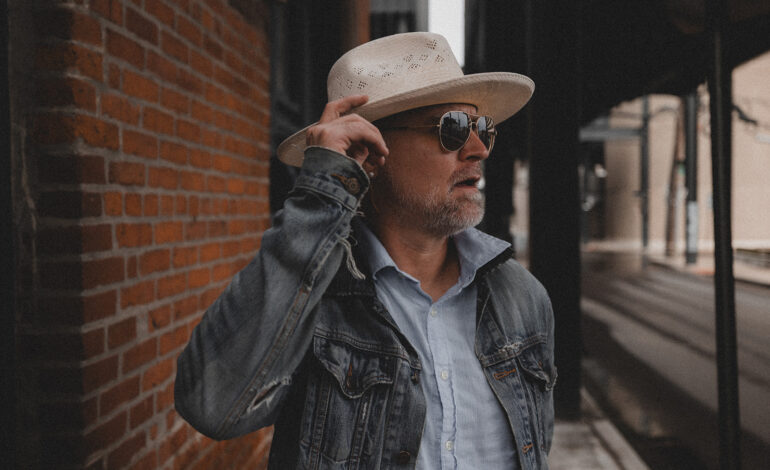

Few artists return to music with the clarity, conviction, and emotional honesty that defines the work of Derry-born songwriter Colm Warren. Best known as the frontman of Belfast punk outfit The Twenty, Warren has spent the last number of years carving out a distinctly personal creative path; one that moves fearlessly between raw punk energy, intimate songwriting, and sweeping orchestral arrangements.
His latest single, “Without You,” released on World Down Syndrome Day, marks the beginning of an ambitious new release cycle planned throughout 2026. Accompanied by a deeply moving video created in collaboration with Down Syndrome Cork, the track has already resonated strongly for its message of compassion, inclusion, and hope. It also reinforces what has become central to Warren’s artistic identity: authenticity above all else.
Whether reflecting on his days with The Twenty, discussing collaborations with artists like Maeve Smyth, or recalling the surreal experience of performing alongside the RTÉ Concert Orchestra at the National Concert Hall, Warren speaks with the same emotional directness that runs through his music. There is no sense of reinvention for reinvention’s sake; only an artist following wherever the songs demand he go.
In this conversation, Colm Warren opens up about creativity, collaboration, emotional truth, and why success now means something far deeper than it once did.
Looking back at your time with The Twenty, what elements of that era still live inside your current music?
The honesty of the writing and my approach to trying to find the right sound to convey a particular emotion or feeling is still the same. The song drives how the music needs to sound ultimately. I’ve actually just recorded a very punky, rockier song recently called “More Dangerous Than A Gun”. It could easily have been a Twenty track – and the vocal delivery on those sorts of songs is absolutely no different. I even sing those types of tracks in to a Shure Beta58A in the studio set up as I would have had it on stage. No delicate subtlety required! I put a song out a while back called “Dead Days”, which is a punk song at heart – and one we used to play live with that band back in the day. So you don’t have to scratch the surface too much!
Your return in 2020 with “Void” marked a stark reinvention—what pushed you back into music after such a long break?
In all honesty, an overwhelming need to do something creative and release these songs out of me. Having refused to barely look at my guitars for years, let alone pick one up or sing, it’s like it all started bubbling up again to the point where I was struggling to think about anything else. Hard to explain – but I just wasn’t happy not making some sort of music. I think I wanted my kids to hear these songs and understand, one day, that’s this is what I was about really as well…like what I was really about at the deepest level.
Was there a moment where you realised your solo work had become something entirely separate from your past identity?
See I don’t really see it that way. I’m just getting to songs that needed a different sort of treatment – and I have worked to help enable me to make that happen with no one trying to control or manage my art but myself. I think that’s the only way this could have happened for someone like me. As you get older and gain experience, life teaches you stuff that you once didn’t understand. So even with disappointments and struggles, it’s often better that you went through them than it would have been had you got what you thought you wanted at the time. That’s definitely the case for me when it comes to music anyway. I’m doing these songs – maybe more by luck than by judgement – when I’m truly ready to deliver them and when I’m 100% clear on exactly why I’m doing them. Because then nothing else matters after that.
Collaborating with artists like Maeve Smyth on “Truth” seemed like a turning point—what did that collaboration unlock for you?
That was brilliant and Maeve has worked on a load of other songs with me since, including “Without You” and the next few on the way. The first thing it unlocked was having a genuinely brilliant singer singing a Colm Warren song – that doesn’t normally happen!! Ha ha!! I think it showed the power of collaboration and the two voices just worked so well together. The song obviously caught some unexpected attention at the time too so that helped raise profile and that type of thing. Maeve’s an unbelievable talent and watching her work in the studio is a genuine privilege!
Performing with the RTÉ Concert Orchestra at the National Concert Hall is a major milestone—what did that experience teach you about scale and restraint?
A mad experience, very unexpected but really interesting and enjoyable. Obviously, it was just such a massive privilege and very emotional to hear musicians of that quality play a song I wrote in such an iconic and amazing venue. The sound was out of this world. The conductor that night was David Brophy as well – who’s a genuine legend in that world. To be honest, I have to admit I probably hadn’t realised just how much of a legend he actually is, which is why he may have looked at me somewhat incredulously when I told him I wasn’t too happy with the tempo the orchestra was playing my song at in rehearsals the previous day!! They nailed it on the night though, ha ha!!!
You’ve moved between punk, minimal songwriting, and orchestral arrangements—what connects all these phases for you?
Again, it’s all about the particular song and emotion – and I suppose where I am in my own life at a particular point. I still would have absolutely no problem writing and recording a 2 or 3 minute punk song if that’s what I thought something needed at a particular time and I could deliver it authentically. Equally, along with John and Joe, we’re trying to make music that’s interesting to listen to and well considered. Without necessarily trying to be, I think we’re doing stuff that sounds fairly unique. Definitely, in terms of the local music scene at home anyway, I think what we’re doing is different – and we’re coming at it in a very different way to what a lot of people might expect. But it’s authentic to us and, ultimately, that’s all that matters.
How do you decide when a song needs simplicity versus full orchestration?
It just depends on the song and the theme behind it. Often, even when the full orchestra is there, we’ll mix so that it’s not always ‘front and centre’. It’s not orchestra for orchestra’s sake – and I don’t want to use samples and synths etc as I like to hear the sound of human beings playing those instruments for real. The arrangements are there to accentuate and help further bring out the artistic theme of the song – and often it can be to add a bit of emotional depth if I’m singing about pretty heavy stuff. Layers of emotion that are far beneath the surface, if you like. They can be hard to access and, musically, it can be challenging to fully reflect that. The next song I’m putting out is a very personal one for us for example – so the orchestration on that is heavily scaled back and subtle. It’s a very raw, exposed song emotionally. And again, that determines what happens from an instrumentation point of view so that we capture the right feeling that I’m seeking to explore or to help other people identify and, hopefully, connect with.
Has your definition of success changed since your early career?
Absolutely. Success for me is getting these songs recorded and the people I love getting to hear them. Anything else is a bonus. I’m very clear that I’m making music for all the right reasons for me and the way I want to do it. I don’t have to deal with any bullshit from any bluffers whatsoever. If only that was the case in all walks of life!
Do you ever feel pressure to maintain a certain emotional “signature,” or do you actively resist that idea?
No. Neither. I just write songs and record them the way I think they need to sound. They will all be absolutely emotional as that’s the whole point for me – I’m literally using them to explore and deal with emotions. Whether that’s happy, uplifting, positive emotion or feelings of sadness, loss, anger or frustration etc just depends on whatever I’ve decided to write about in a particular song. The way I look at it is that they will all have my “signature” to them naturally and regardless – as long as I am authentic and honest in my writing and delivery of them.
Where do you see your sound heading after this new 2026 release cycle begins?
Good question! I have a bunch of punkier, rockier tracks, similar to “Dead Days”, that are sitting half-done. I need to finish those off and it might make sense to group them together on an EP or something like that down the line. That might cause me to add a few more in that sort of vein over the next few months but we’ll have to see what’s fighting the hardest to come out of me at the next pre-production session!!