
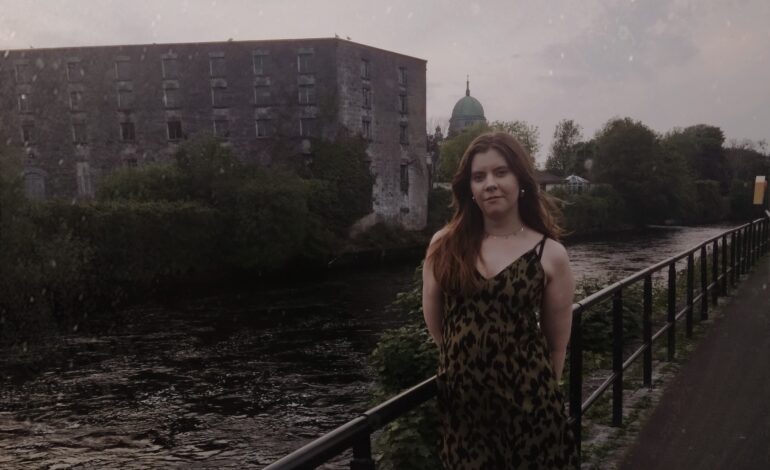
Music publicist, journalist, and poet Danielle Holian sits down to discuss her latest poetry collection, Growing Pains, a deeply personal exploration of love, control, and the long road back to self.
From behind-the-scenes work in the music industry to the page, Holian has built a career rooted in storytelling across multiple creative spaces. With three previous poetry collections, Beautifully Chaotic, The Dilemma, and Surviving You, her latest release with Growing Pains marks a shift into her most vulnerable and conceptually unified body of work to date.
In this conversation, she reflects on emotional memory, artistic structure, and the quiet strength it takes to turn lived experience into literature.
Can you introduce yourself to our readers and share a bit about your creative journey so far?
I’m a poet, music publicist, and music journalist, and my creative work has always been rooted in storytelling and emotional expression. I began sharing my poetry publicly in my late teens, with my first collection Beautifully Chaotic released in 2019, followed by The Dilemma in 2020 and Surviving You in 2021. Each collection reflects a different stage of my life and growth, both personally and creatively. My writing often explores themes like mental health, love, heartbreak, trauma, and self-discovery, and poetry has always been a way for me to process and make sense of lived experience. Alongside that, working in music has also influenced my voice and deepened my appreciation for lyricism and narrative. Over time, my journey as a writer has been about learning to trust my own perspective and continuing to evolve while staying honest in my work.
You work across music publicity, journalism, and poetry. How do these worlds influence each other in your day-to-day life?
They’re all much more connected than they might seem at first. Working in music publicity and journalism has really shaped the way I think about storytelling, language, and emotional impact, which naturally feeds into my poetry. Being around artists and music on a daily basis also keeps me creatively inspired. It reinforces the importance of honesty and connection in any form of writing. At the same time, poetry gives me a more personal, reflective space away from the fast pace of music work. It allows me to process things in a slower, more intentional way. I think each area of my work balances the others, and they all influence how I approach creativity in my day-to-day life.
What first pulled you toward writing, and how did poetry become part of that path?
I’ve always felt a pull toward writing, even before I fully understood it as a creative outlet. Growing up, I often felt quite alone, and as the eldest daughter, there were times it felt like I had to take on more emotional responsibility than I was ready for. I kept a lot of things in, and writing became a space where I could release what I didn’t have words for out loud. Poetry naturally became part of that because it allowed me to express emotion in a way that felt both honest and structured. It gave me a language for things I was still trying to understand, and over time, it became less of a coping tool and more of a form of self-expression and creativity that I really connected with.
How does living and working in the West of Ireland shape your creative perspective?
Living and working in the West of Ireland definitely shapes my creative perspective in a quiet but constant way. There’s a stillness and openness to the landscape that encourages reflection, and I think that naturally feeds into how I write. It gives me space to slow down and process things, which is important for the kind of emotional work my poetry often explores. At the same time, there’s a strong sense of community and culture here that keeps me connected outwardly as well. I think that balance between solitude and connection has influenced the way I approach creativity; there’s space for introspection, but also an awareness of the wider world beyond it.
You’ve built a career in the music industry. What’s one misconception people have about music publicists?
One common misconception is that music publicists are only focused on “getting press” or chasing coverage, when in reality the role is much more about storytelling and strategy. A big part of what we do is understanding an artist’s identity and helping shape how that story is communicated across different platforms in a way that feels authentic and consistent. It’s also a very relationship-driven role; working closely with artists, writers, editors, and platforms over time. So while press is a visible outcome, a lot of the work happens behind the scenes in building narratives and long-term connections rather than just short-term results.
When you shift from writing press material to writing poetry, how does your mindset change?
The mindset shift is quite noticeable. When I’m working on press material, I’m thinking more about clarity, structure, and how to communicate an artist’s story in a concise and strategic way. It’s very intentional and audience-focused, with a focus on tone and messaging. With poetry, it’s almost the opposite. I move away from structure and allow myself to be more instinctive and emotionally driven. It becomes less about communicating something clearly and more about feeling my way through it and letting language take shape more freely. I think both approaches influence each other in interesting ways, but they definitely require different headspaces; one is more outward-facing and structured, while the other is much more internal and intuitive.
Your new collection Growing Pains explores deeply personal emotional territory. What made now the right time to release it?
For me, the timing of releasing Growing Pains felt like it came after a long period of living inside the experiences it explores, rather than alongside them. These poems come from a chapter of survival, recovery, and slow rebuilding, and I think I needed distance in order to write them with honesty, rather than being overwhelmed by them in real time. There’s something about reaching a point where you can look back without being completely consumed by what happened, but still feel it clearly enough to tell the truth of it. That balance made now feel like the right time; not because the work is finished emotionally, but because I was finally able to give it language, shape, and space to exist beyond just my own experience.
The book traces a journey through love, control, and self-reclamation. Was it difficult to revisit those experiences through writing?
Yes, at times it was difficult to revisit those experiences through writing, especially because many of the poems were originally written while I was still going through them. Returning to them later meant looking at everything with more distance, which brought a different kind of emotional awareness. That said, the process also created space for reflection. It allowed me to understand those experiences in a more structured way, rather than feeling overwhelmed by them in the moment. While it wasn’t always easy, I think that’s also what made the collection feel meaningful to shape; it turned something very personal and chaotic into something I could step back from and make sense of.
Do you see Growing Pains more as a narrative arc or a collection of standalone poems?
I see Growing Pains as a bit of both. Each poem can stand on its own and hold its own emotional weight, but together they also form a clear narrative arc. Looking back, the collection naturally reflects a progression: from love and emotional intensity, through loss of self, and ultimately toward awareness, separation, and healing. Even though the poems were written at different times and from different emotional places, they came together to tell a larger story. So while each piece is independent, there’s also an underlying thread that connects them all and gives the collection its shape.
You divide the book into five stages: Honeymoon, Handcuffs, Hangover, Hindsight, and Homecoming. How did that structure come together?
The structure came together quite organically once I stepped back and looked at the poems as a whole. I started noticing a natural emotional progression running through them, and the five stages, Honeymoon, Handcuffs, Hangover, Hindsight, and Homecoming, emerged as a way to map that journey more clearly. Each stage represents a different emotional shift within the experience the book explores, from the initial intensity and idealisation, to the loss of control and clarity, and eventually toward reflection and healing. Naming the sections felt like a way to give structure to something that was originally very chaotic and personal, and to help guide the reader through that emotional arc in a more intentional way.
How has your relationship with vulnerability changed since your first poetry collection?
My relationship with vulnerability has definitely evolved since my first collection. When I started out, being vulnerable in my writing felt quite instinctive, almost like I was just putting emotions onto the page without much distance or reflection. There was honesty there, but not always intention or clarity. Over time, I’ve learned how to hold vulnerability more consciously. It’s still central to my work, but I’m more aware of how I shape it and what I choose to share. I think I’ve become more comfortable with the idea that vulnerability doesn’t have to mean oversharing; it can also be about honesty, control, and trust in your own voice.
In a world dominated by fast content, what do you think poetry offers that other forms of storytelling don’t?
In a world dominated by fast, constant content, I think poetry offers something much slower and more intentional. It asks the reader to pause, sit with the language, and really feel what is being said rather than just consume it quickly and move on. There’s also a level of emotional compression in poetry that I don’t think many other forms of storytelling offer in the same way. A few lines can hold a full emotional experience or memory, and leave space for the reader to bring their own interpretation and feelings into it. For me, that makes poetry feel very intimate; it creates a quiet space in a very loud world, where emotion and reflection can actually breathe.
Who are some writers, artists, or cultural figures currently inspiring your work?
I’m always inspired by a mix of writers, musicians, and artists who approach emotion and storytelling in really honest ways. In poetry, I still find myself drawn to voices like Sylvia Plath, Olivia Gatwood, and Rupi Kaur, particularly in how differently they each handle vulnerability and language. Outside of poetry, I’m really inspired by artists like Taylor Swift, MARINA, and Taylor Momsen, who all create very emotionally driven, narrative-led work. I’m also constantly influenced by the wider creative community around me through my work in music journalism and publicity; being around artists who are actively shaping culture is a big source of inspiration in itself.
If readers take only one feeling or message from Growing Pains, what do you hope it is?
If readers take only one thing from Growing Pains, I hope it’s a sense of hope and recognition. While the collection explores very difficult experiences, at its core, it’s also about survival, self-awareness, and the process of finding your way back to yourself. More than anything, I hope it reminds people that even in moments that feel isolating or overwhelming, they are not alone in what they’re feeling; and that healing, in its own time, is possible.
What’s next for you creatively? More poetry, more industry work, or something entirely unexpected?
I don’t see it as one or the other. I think I’ll always continue writing poetry alongside my work in the music industry, because they both feed into each other in different ways. At the moment, I’m focused on continuing to grow as a writer and sharing Growing Pains with readers, but I’m also interested in exploring longer-form storytelling in the future, particularly novel writing. I like the idea of letting things evolve naturally rather than putting too much pressure on what comes next. I’m open to wherever the creative process leads, whether that’s more poetry, new collaborations, or something completely unexpected.
Connect with Danielle Holian on Instagram, X, Facebook, TikTok